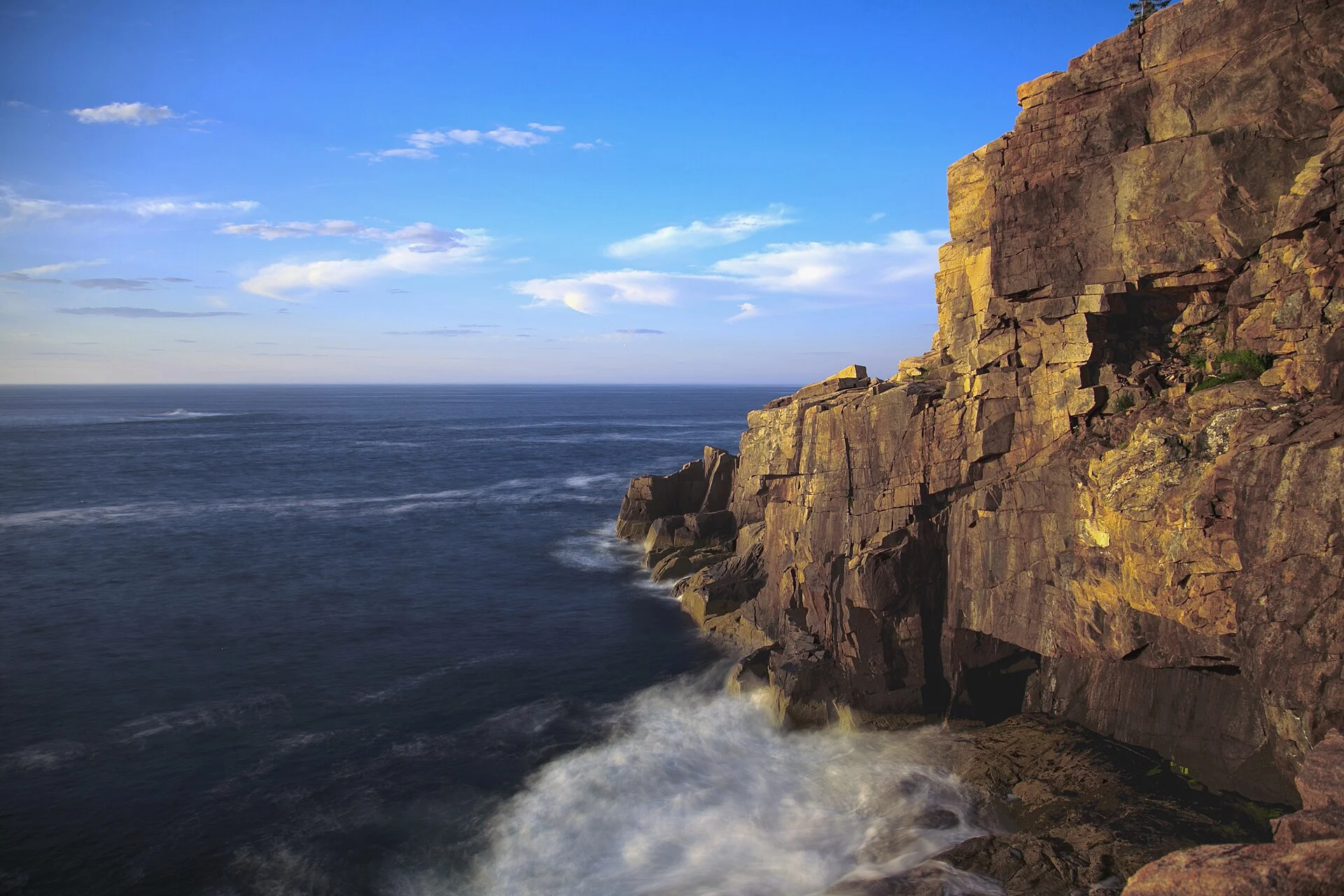
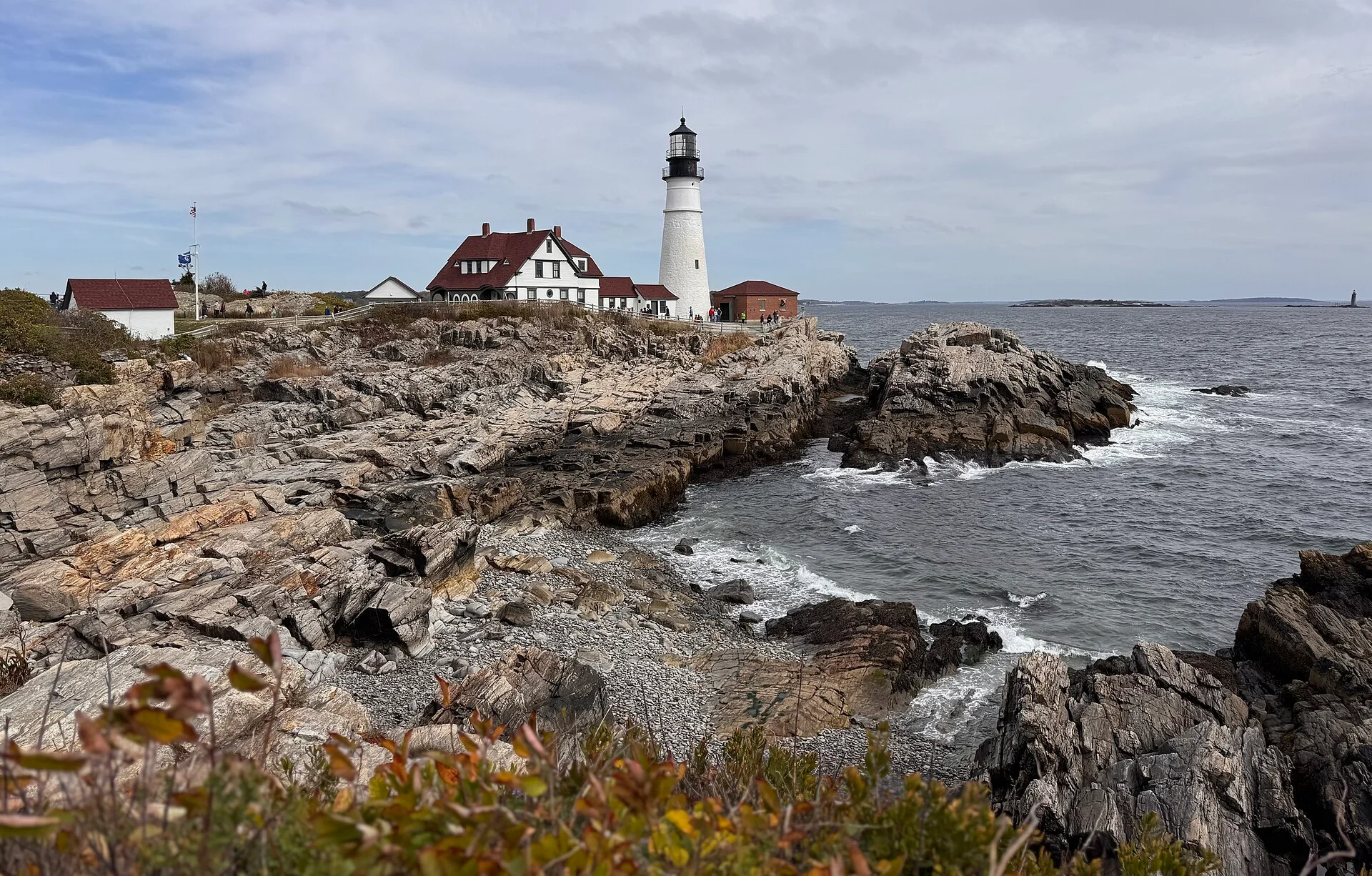
Acadia is a landscape to divide into manageable outings. Rocky headlands, lakes, woodland and mountain viewpoints ask for different routes and levels of effort. Start with one area on Mount Desert Island, understand how you will reach it and return, then add another stop only if it still leaves room to enjoy the first. A national park boundary does not turn every trail or facility into the same kind of visit.
The land now protected by Acadia has a human history much older than the national park. It remains part of the Wabanaki homeland, with living communities and enduring cultural connections. Read the park's Wabanaki interpretation alongside its accounts of tourism, conservation and landscape design. The coast is a cultural place as well as a view.
Rock, ice and a designed landscape
Acadia's geology connects ancient rock formation with later glaciation and continuing erosion. The result includes granite headlands, valleys and lakes. Historic trails and carriage roads add another layer: people have deliberately shaped how visitors move through this landscape. Notice the path under your feet as well as the scenery it reveals.
LOOK A LITTLE CLOSER
What to notice.
01
Choose a coastal section
Sand Beach, Thunder Hole and Otter Point provide different ways to meet the Atlantic shore. Select a specific section using the NPS trail description and current alerts. Ocean Path changes surface and includes uneven stretches and staircases; this guide does not certify a complete accessible route or an all-segment opening.
02
Look across Jordan Pond
The Bubbles frame the northern end of Jordan Pond, creating a very different scene from the exposed coast. Enjoy an appropriate viewing area or choose a walk that fits your group. The full shoreline path has rough sections, particularly on its western side. Wading and swimming are prohibited in this drinking-water supply.
03
Compare Bass Harbor’s lighthouse setting
Bass Harbor Head Light Station stands in Tremont on the southwest side of Mount Desert Island. Its limited parking and different viewing routes deserve a separate plan. The lighthouse interior is not open to ordinary visitors. Choose designated viewing areas rather than assuming the rocky position in a photograph is a suitable route.
BEFORE YOU GO
Make your visit count.
Separate passes and reservations
Check the current NPS entrance rules for your party, including non-US resident fees and pass exceptions. Cadillac Summit Road has a separate seasonal vehicle-reservation system. The published 2026 requirement ended on 25 October; those dates are not a promise for another season. Confirm road access and the current booking rules before setting a summit plan.
Use the actual seasonal calendar
The NPS publishes facility-specific dates for visitor centers, camping and food service. At the 28 October 2026 check, its table listed 26 October as the Jordan Pond House restaurant closing date. A park landscape remaining visitable does not mean every service is operating. Recheck the schedule for your own trip and carry what you need.
Build transport around the operating routes
Island Explorer offers seasonal fare-free transport, not a year-round connection to every destination. Consult its operator's calendar, routes and return departures. Cadillac Summit Road is not served by the shuttle. If using a car, keep parking restrictions and the possibility of a full lot in your plan rather than expecting a reserved space.
Match the route to the group
Consult specific NPS accessibility information and trail descriptions rather than inferring ease from a short distance or a photograph. Choose an alternative or turn back when terrain, weather or a closure changes the plan. Keep clear of cliff edges, follow posted directions and save useful maps offline before setting out.
Hulls Cove Visitor Center, Bar Harbor, Maine, United States
The map marker identifies the Hulls Cove Visitor Center parking area on Mount Desert Island, not the whole park or a guaranteed accessible entrance. Check the NPS directions and current seasonal facilities first. Plan each outing from your actual base; coastal and lake trailheads are separate destinations with their own parking and transport arrangements.
Keep neighboring communities in your planning as places to stay, eat and take a break between park outings. Check actual opening dates and locations through official visitor information. This guide does not yet supply a verified local hotel or restaurant collection, live availability or quoted prices.
An original AI-assisted guide checked by TourPedia before publication. Visiting arrangements can change; use the official visitor links before travelling.
MAKE YOURSELF AT HOME
Stay near Acadia National Park.
A curated collection of places to consider around this area.
Curated hotels for this area are not available yet.
Distances are approximate straight-line measurements from the Acadia National Parkarea marker, not walking routes. This is a small researched collection, not all nearby hotels. Check rates and availability on the hotel website.
A TASTE OF THE NEIGHBORHOOD
Where to eat near Acadia National Park.
Find a meal that fits your visit, with official contact links.