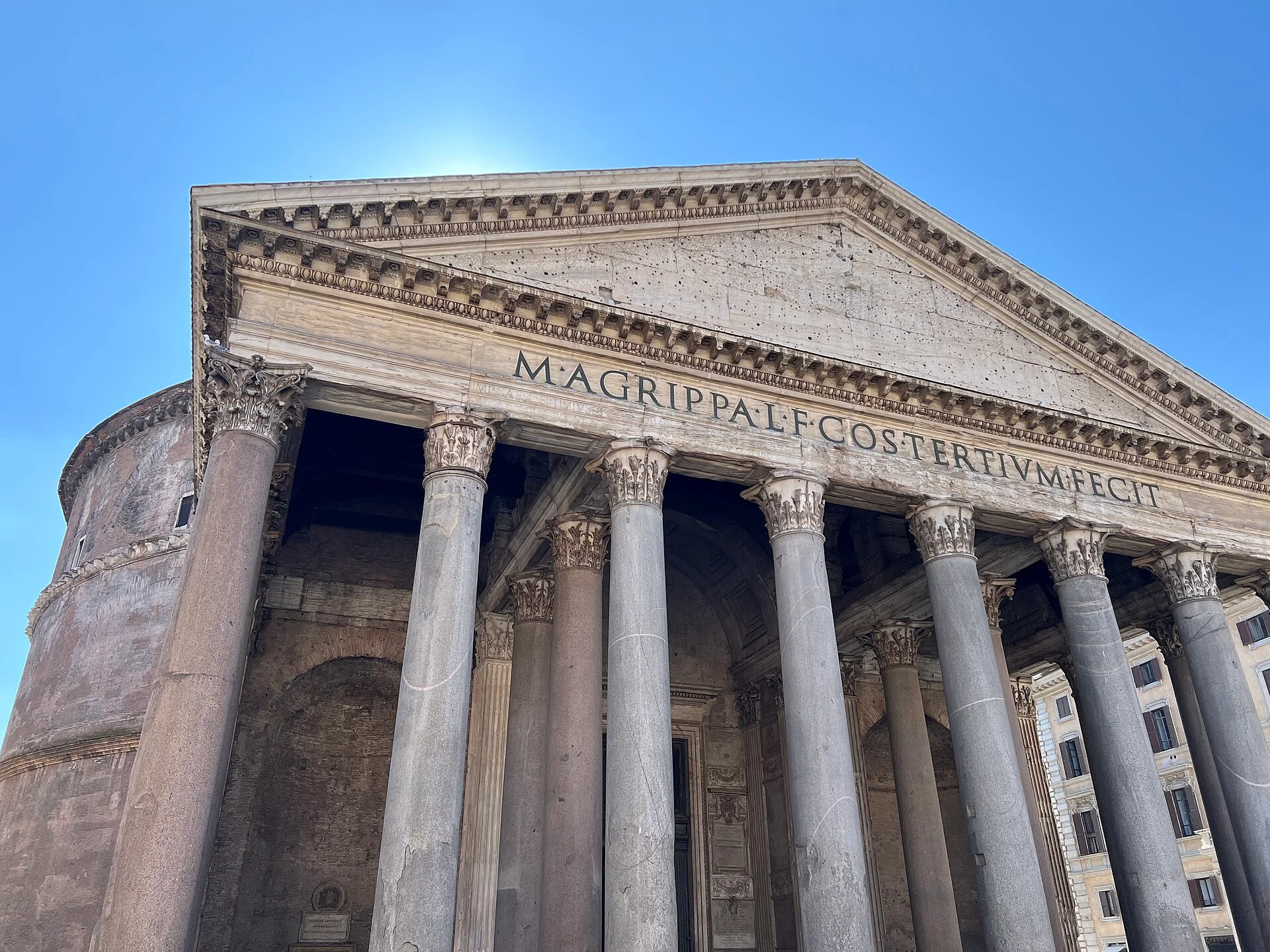
The Pantheon rewards a visit built around looking carefully. Start outside, where a columned portico frames the entrance, then notice how a circular interior changes your sense of the building. The opening at the crown of the dome connects this enclosed space with the sky. Its ancient architecture and continuing life as the Basilica of Santa Maria ad Martyres belong to the same visit: leave room for both, rather than treating the church as an empty setting for photographs.
Agrippa established the earlier Pantheon in the late first century BCE. The present structure belongs to the rebuilding under Hadrian, dated by the monument's official history to AD 118-125. The inscription naming Agrippa remains above the entrance. Read it as a link to the earlier foundation; the familiar facade does not mean the whole building survives unchanged from Agrippa's time.
AD 609: a new religious life
In AD 609, Pope Boniface IV consecrated the building as Santa Maria ad Martyres after it was given to him by Emperor Phocas. That Christian identity continues today. Looking around the interior, consider the building as a place repeatedly used and adapted over time, rather than imagining that every element belongs to one ancient moment.
LOOK A LITTLE CLOSER
What to notice.
01
Follow the dome's geometry
The interior's height and diameter are approximately equal, at just over 43 metres. Look from the circular floor space toward the coffered dome and its open oculus, noticing how the pattern draws your eye upward. Then lower your gaze again: the relationship between the room around you and the vault above is more revealing than a photograph of the ceiling alone.
02
Notice light and rain
The oculus is an opening rather than a glazed window. Light enters from above, and rain can enter too; the official history records drainage holes in the floor. Observe the sky and the interior together without expecting a particular sunbeam on demand. Cloud cover, the season and the time of your visit will shape what you see.
03
Give the walls and memorials their own attention
The marble floor's geometric pattern and the chapels around the room deserve a separate look after the dome. Raphael's tomb and the royal tombs of Vittorio Emanuele II, Umberto I and Margherita of Savoy bring later Italian history into the ancient space. Follow the perimeter at a considerate pace and keep clear of people who are praying or stopping to read the memorials.
BEFORE YOU GO
Make your visit count.
Use the official admission route
Buy through Musei Italiani or the on-site ticket facilities, and follow the time slot you select. The monument states that there is no skip-the-line admission. Bring the original official ticket and the identification required by its conditions. Compare the actual admission product before paying for an external package; an extra service is a separate choice from entry.
Check the timetable before fixing your day
The current regular timetable is 9am-7pm, with last individual admission at 6.30pm and on-site ticket sales closing at 6pm. Religious celebrations can change access. Check the official page and booking calendar for your date, then leave some flexibility around the visit instead of scheduling your next commitment against the advertised last admission.
Dress and behave for a working basilica
Cover your shoulders and avoid very short or transparent clothing. Keep conversation quiet, silence devices and finish food and drinks before entering. Religious services are reserved for worshippers. If a service changes your sightseeing plans, return during visitor access rather than treating worship as a way to bypass normal admission.
Plan your access and what to carry
The official accessible entrance uses the external ramp on the Via della Minerva side. There is no cloakroom. If you need a particular arrival arrangement, ask the monument directly before travelling and describe your needs clearly. Keep your belongings manageable so that an unavailable storage facility does not become a surprise at the entrance.
Build the visit around observation
A simple order works well: read the facade, take in the whole interior, study the dome, then look around the perimeter. Treat that sequence as a suggestion, adapting it to the space available and any directions from staff. Choose a few details to remember; leaving with an understanding of the building can be more satisfying than collecting every possible camera angle.
Set Piazza della Rotonda as your destination and check the approach from your accommodation before setting out. The map marker identifies the monument area; follow the actual entrance instructions, including the Via della Minerva ramp when required.
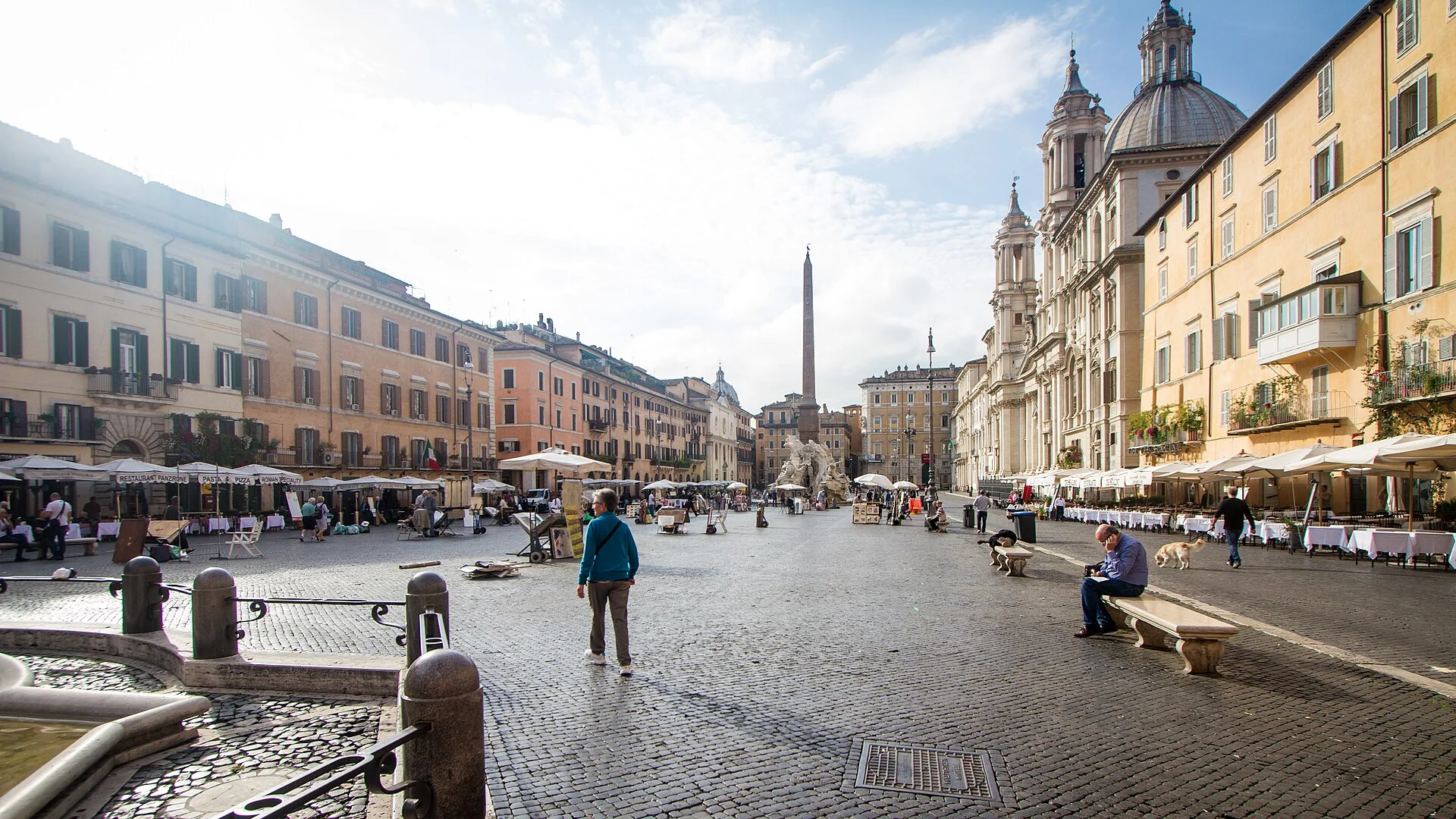
Continue west to Piazza Navona for a different relationship between ancient and later Rome. Its elongated outline follows the Stadium of Domitian, while its fountains and surrounding buildings give it a Baroque character. Look at the shape of the whole square before approaching individual fountains. Use the official visitor page to decide whether to add any of the surrounding sights.
An original AI-assisted guide checked by TourPedia before publication. Visiting arrangements can change; use the official visitor links before travelling.
MAKE YOURSELF AT HOME
Stay near Pantheon.
A curated collection of places to consider around this area.
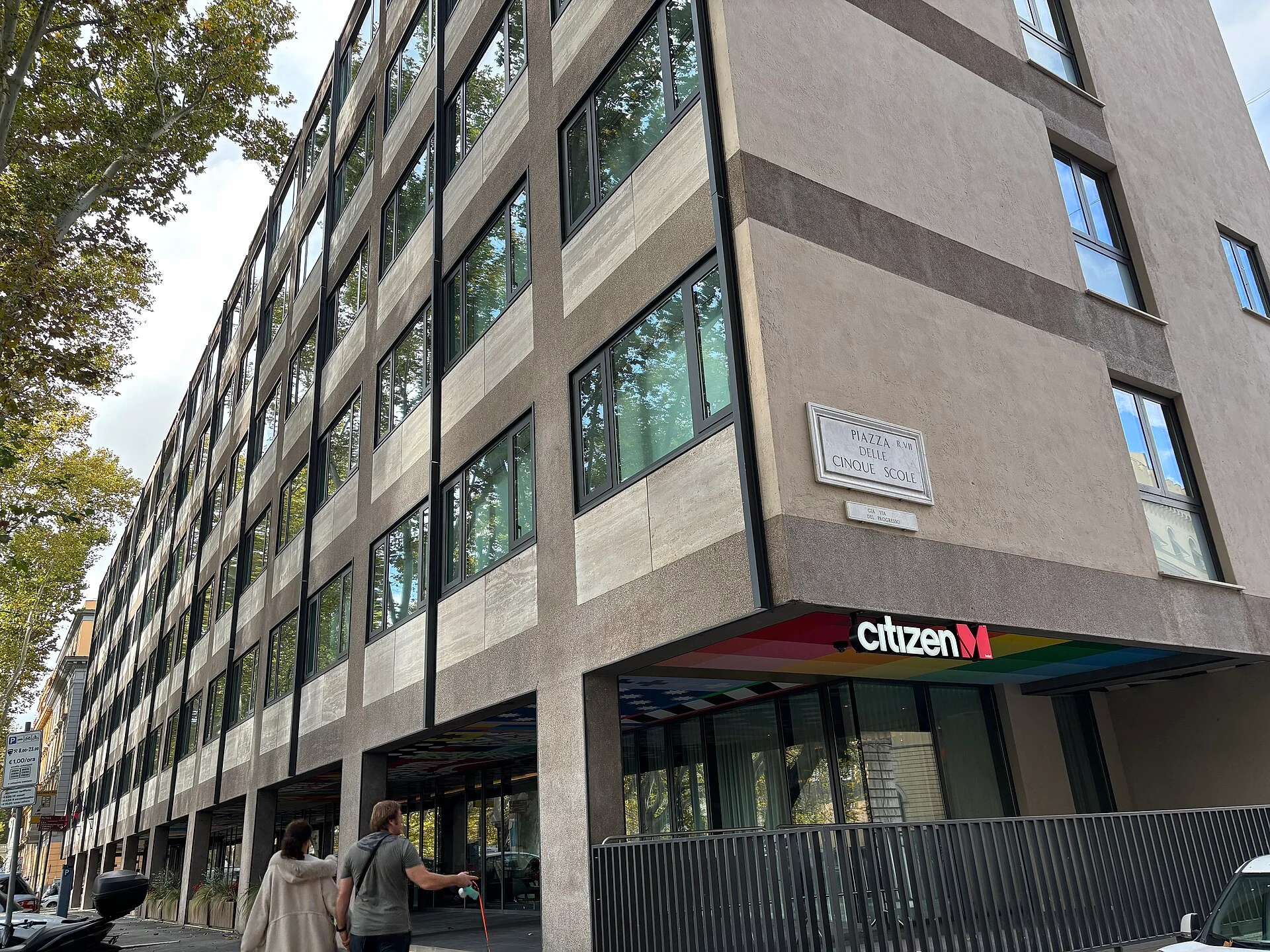
The citizenM Rome Isola Tiberina exterior photographed in November 2024; present appearance and room details may differ.Photo by Nick-D / Wikimedia Commons · CC BY-SA 4.0 · Cropped for display; converted to WebP.
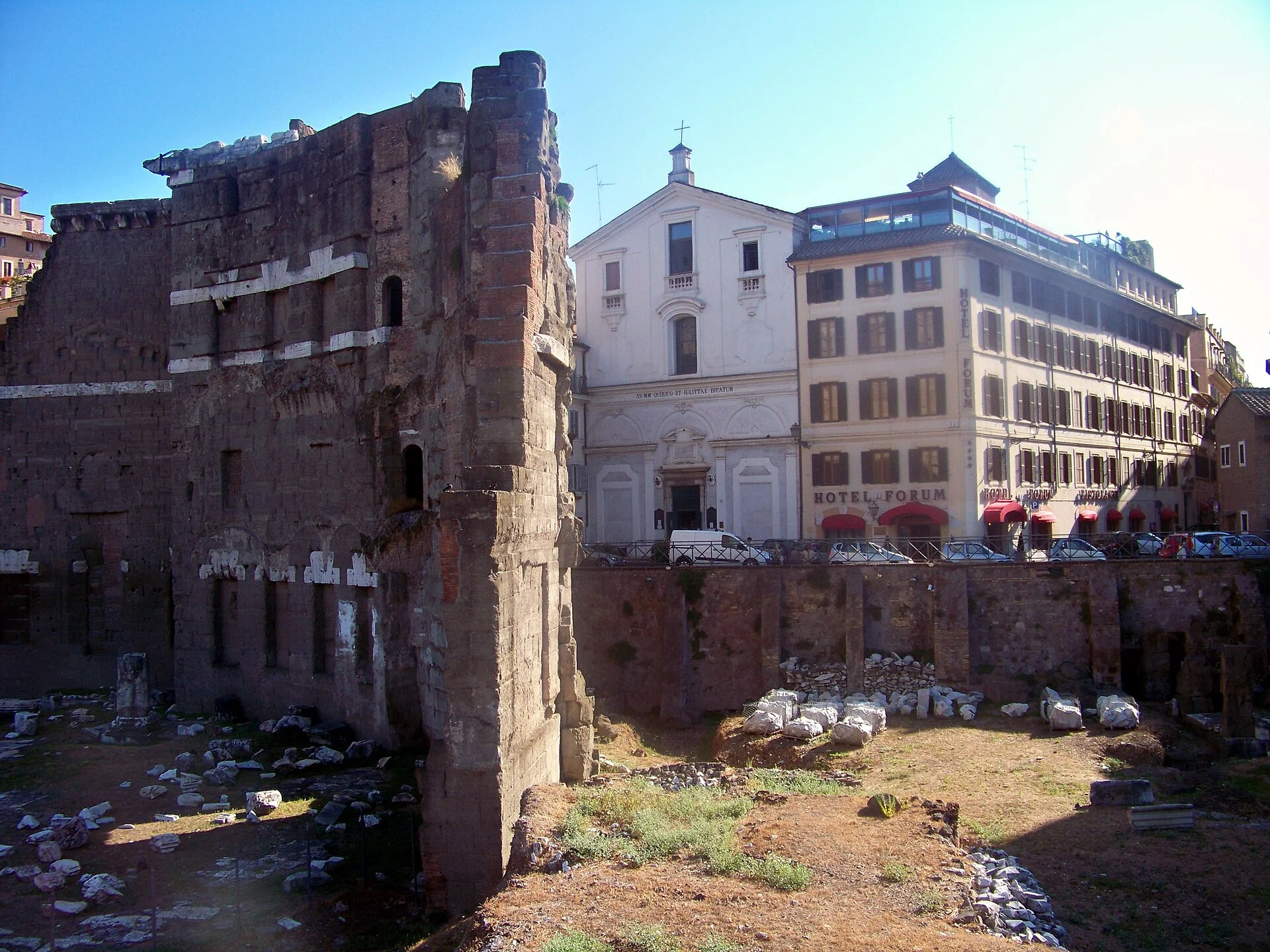
"Hotel Forum (right side)". Hotel Forum is on the right beyond the ruins. Exterior photograph taken in August 2011; room categories and present appearance should be checked with the hotel.Photo by Larry from Charlottetown, PEI, Canada / Wikimedia Commons · CC BY 2.0 · Cropped for display; converted to WebP.
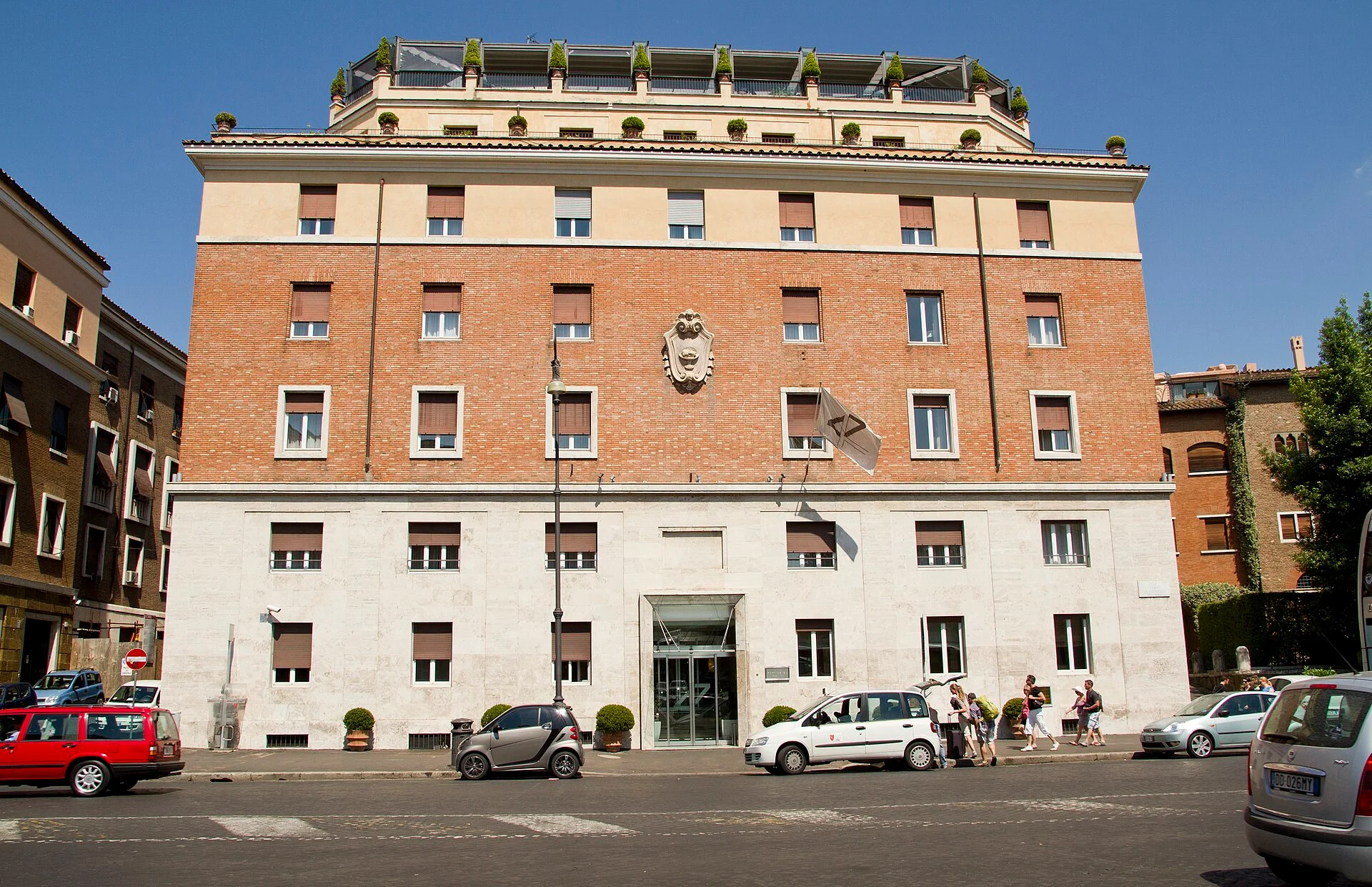
"Fortyseven Hotel Rome". The hotel exterior photographed in May 2012. This archival street view does not establish current room interiors or included facilities.Photo by trolvag / Wikimedia Commons · CC BY-SA 3.0 · Cropped for display; converted to WebP.
Distances are approximate straight-line measurements from the Pantheonarea marker, not walking routes. This is a small researched collection, not all nearby hotels. Check rates and availability on the hotel website.
A TASTE OF THE NEIGHBORHOOD
Where to eat near Pantheon.
Find a meal that fits your visit, with official contact links.