Rome, Italy · Historic squares & fountains

Piazza Navona

Explore Piazza Navona through its ancient stadium outline, three very different fountains and the facade of Sant'Agnese in Agone, then connect it with the Pantheon.

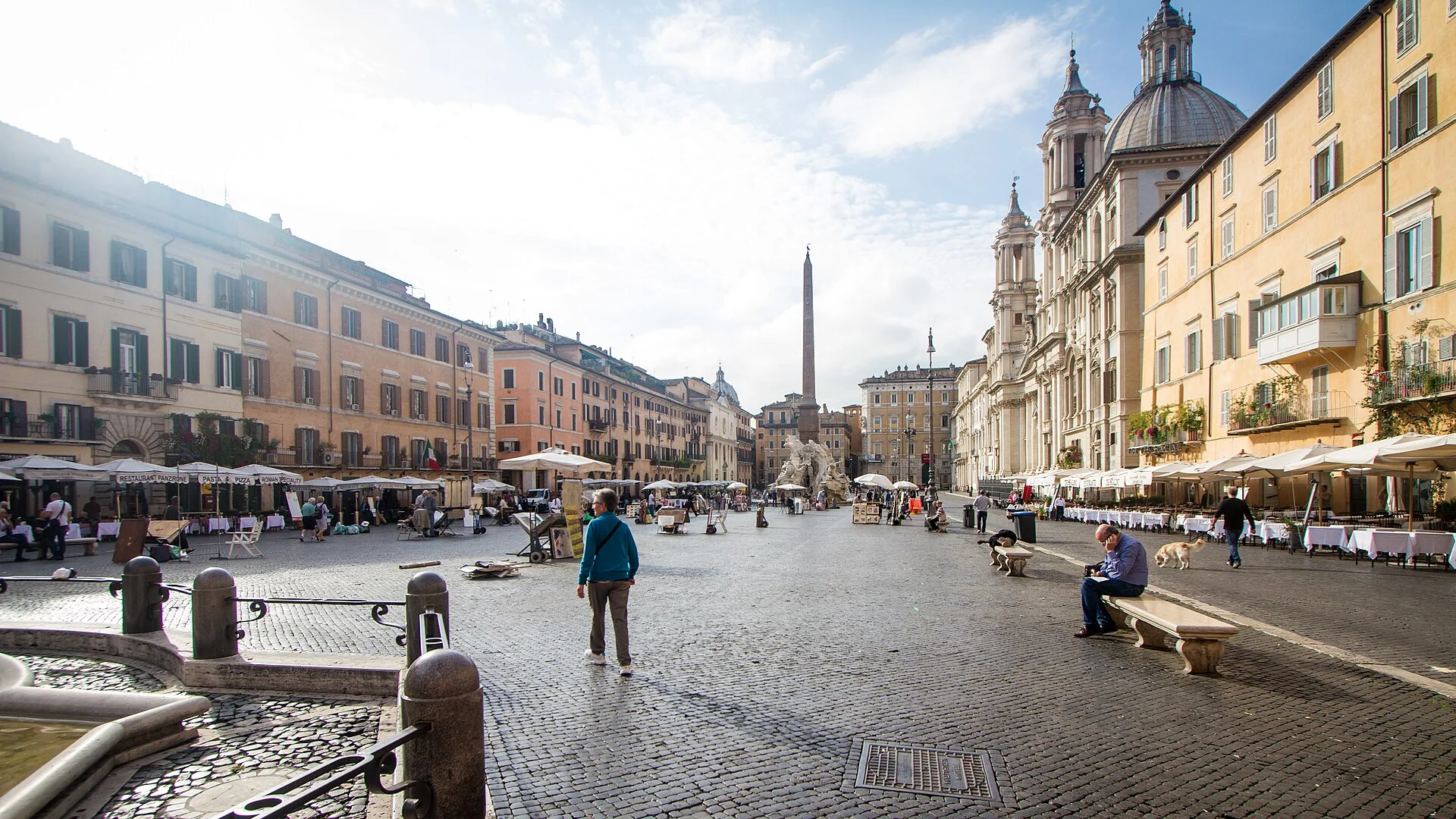
Long view across Piazza Navona with the central obelisk, Sant'Agnese in Agone and surrounding buildingsPiazza Navona, Rome, Italy
“Piazza Navona - ND0_6591” (Commons file: Piazza Navona Rome). The square’s long axis leads towards the central obelisk, with Sant’Agnese in Agone on the right, October 2013. Photo by N i c o l a (Nicola Delfino) / Wikimedia Commons / CC BY 2.0. Resized and converted to WebP; covers/cards may crop. / Wikimedia Commons · CC BY 2.0 · Cropped for display; converted to WebP.
WHY IT MATTERS

Why this place matters.

Piazza Navona works best when you first look along its length, then move closer to the details. The long open space, three fountains and surrounding facades form a sequence rather than a single viewpoint. Follow that sequence from one end to the other, pausing at the central obelisk and turning towards Sant'Agnese in Agone. The pleasure is in changing scale: the shape of the whole square, a fountain's sculpted figure, then the buildings that frame both.

Place typeHistoric squares & fountains
DestinationRome, Italy →
THE STORY BEHIND THE PLACE

How this place came to be.

An ancient outline in a later city

The square follows the footprint of the Stadium of Domitian, inaugurated in AD 86 for athletic contests. Its long sides and curved northern end preserve a connection with that earlier space even though today's buildings and fountains tell later stories. Trace the outline with your eye before concentrating on individual monuments; the plan is one of the square's most useful historical clues.

A Baroque setting with several authors

Pope Innocent X Pamphilj reshaped the square's seventeenth-century setting around his family palace, the Fountain of the Four Rivers and Sant'Agnese. Its appearance is not the work of one artist or one moment. The church began with Carlo and Girolamo Rainaldi; Francesco Borromini subsequently changed its design substantially. Notice how its concave facade and dome engage with the fountain across the open space.

LOOK A LITTLE CLOSER

What to notice.

  1. 01

    Read the Fountain of the Four Rivers

    Bernini's central fountain was unveiled in 1651. Around the rocky base of the obelisk, four monumental figures represent the Danube, Ganges, Nile and Rio de la Plata, associated with Europe, Asia, Africa and America. Move around it to follow the figures, animals and plants. A single front-facing photograph misses the changing relationships between sculpture, openings in the rock and the obelisk above.

  2. 02

    Compare the southern Fountain of the Moor

    At the southern end, the Fontana del Moro combines a sixteenth-century basin by Giacomo della Porta with later changes. Its central figure was carved by Giannantonio Mari to Bernini's design. Compare the figure and dolphin with the smaller forms around the basin, then look back towards the central fountain. The differences make the square a richer place than a list of three interchangeable fountains.

  3. 03

    Find the later sculpture at the northern end

    The Neptune Fountain also began with a basin by Giacomo della Porta. Its Neptune fighting an octopus and surrounding sea creatures were nineteenth-century additions by Antonio Della Bitta and Gregorio Zappala. Looking at it after the other fountains helps separate the square's different phases. The subject is classical, but that does not make the sculptural group an ancient Roman survival.

BEFORE YOU GO

Make your visit count.

Keep the square and its attractions separate

A walk across the public square is separate from a visit inside a church, museum or archaeological area. You can build an outing around the outdoor setting, then choose an interior that interests you. Check that venue's own arrangements before adding it; a tour or admission product mentioning Piazza Navona does not define access to the square itself.

Recheck the underground archaeological area

At the check on 27 October 2026, Turismo Roma's listing for the Stadium of Domitian archaeological area stated that it was closed for restoration. Confirm the latest notice and operator information before planning an underground visit. Treat that specific listing separately from the outdoor square, and do not build the day around an assumed opening or an advertised ticket alone.

Choose a pace that lets you compare

Start at either end, give each fountain a distinct stop and allow time to look back along the square. Daylight is useful for reading stonework and sculptural details. If you return later, observe how the setting changes rather than expecting an identical scene to an older photograph. Leave space around people who have stopped to look, and choose breaks to suit your own day.

Plan your approach and any interior visit

Check your route from your accommodation and use Rome's official accessibility information if you need help choosing an approach. The map point identifies the square, not a surveyed accessible entrance. For Sant'Agnese or an archaeological visit, ask the venue about the specific entry and assistance you need; the outdoor itinerary does not establish the accessibility of those separate interiors.

Official hours & tickets
FIND YOUR WAY

Find Piazza Navona.

Piazza Navona, Rome, Italy

Set Piazza Navona as your destination and check the current route from your starting point. Explore the square on foot at a pace that suits you; use the northern and southern fountains as orientation points rather than committing to a fixed walking time.

Open location in Google Maps The marker identifies the monument area. Follow the entrance shown on your booking.
CONNECT THE STORIES

Explore around Piazza Navona.

Pantheon

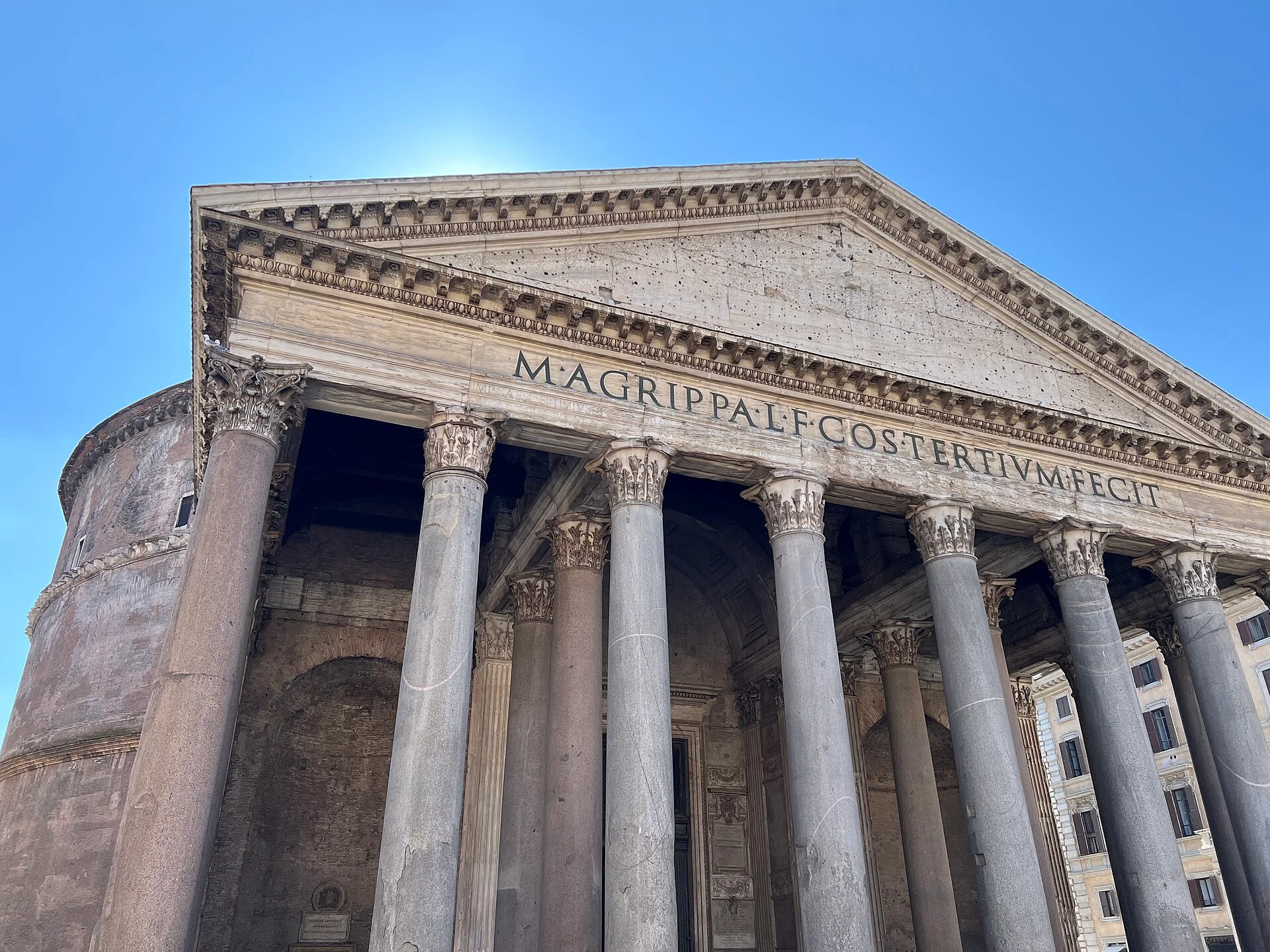
Continue east towards the Pantheon for a contrast between this long outdoor space and a concentrated circular interior. Use TourPedia's Pantheon guide to decide whether to add an interior visit and to find its official admission links. Keep the two stops as distinct experiences, with enough room in your plans to enjoy the streets between them.
An original AI-assisted guide checked by TourPedia before publication. Visiting arrangements can change; use the official visitor links before travelling.

MAKE YOURSELF AT HOME

Stay near Piazza Navona.

A curated collection of places to consider around this area.

Explore nearby stays
The street-facing brick facade of 47 Boutique Hotel on Via Luigi Petroselli in Rome1.2 km · straight-line
Boutique hotel

47 Boutique Hotel

Forum Boarium · near the Tiber

A Forum Boarium base facing the Mouth of Truth area, with a rooftop restaurant, an internal courtyard and a gym.

  • Internal courtyard
  • Gym
  • Rooftop restaurant
View hotel
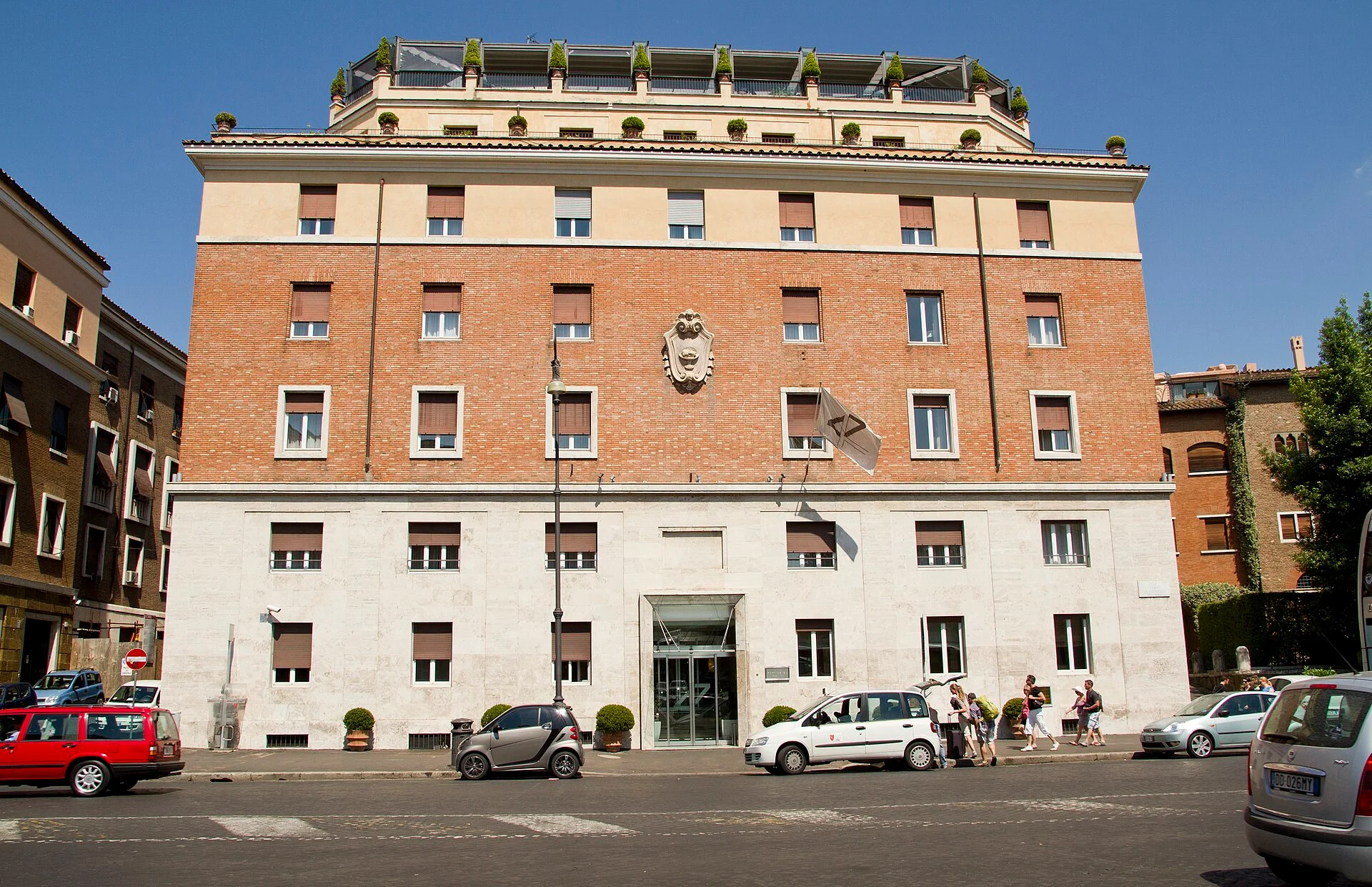
"Fortyseven Hotel Rome". The hotel exterior photographed in May 2012. This archival street view does not establish current room interiors or included facilities.Photo by trolvag / Wikimedia Commons · CC BY-SA 3.0 · Cropped for display; converted to WebP.
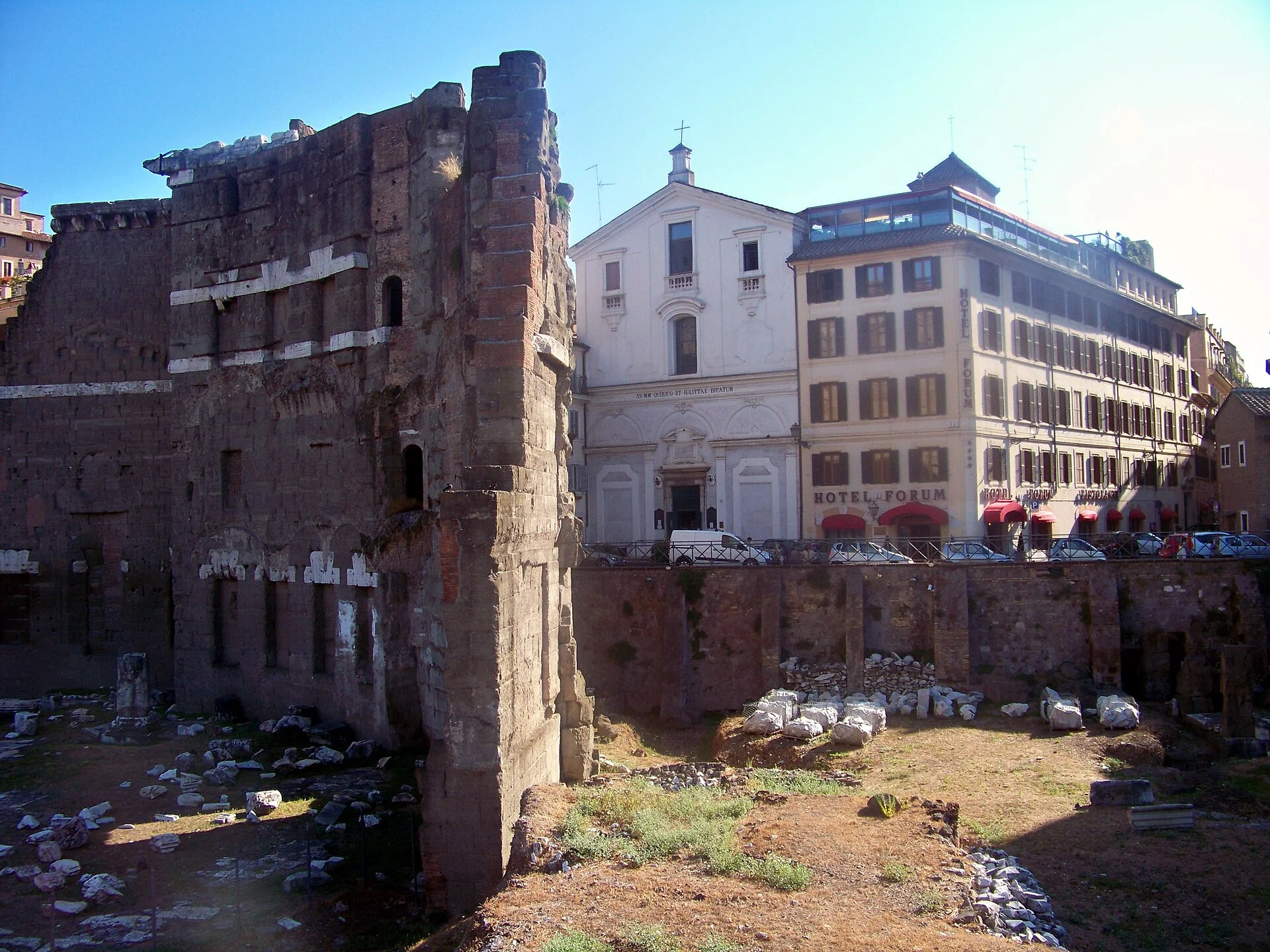
Hotel Forum on the right beyond the ruins of the Forum of Nerva in Rome1.3 km · straight-line
City hotel

Hotel Forum

Imperial Forums · Monti edge

Stay beside the Imperial Forums at a city hotel with rooftop dining and room categories for different group sizes.

  • Wi-Fi
  • Rooftop restaurant and bar
  • Family room categories
View hotel
"Hotel Forum (right side)". Hotel Forum is on the right beyond the ruins. Exterior photograph taken in August 2011; room categories and present appearance should be checked with the hotel.Photo by Larry from Charlottetown, PEI, Canada / Wikimedia Commons · CC BY 2.0 · Cropped for display; converted to WebP.

Distances are approximate straight-line measurements from the Piazza Navonaarea marker, not walking routes. This is a small researched collection, not all nearby hotels. Check rates and availability on the hotel website.

A TASTE OF THE NEIGHBORHOOD

Where to eat near Piazza Navona.

Find a meal that fits your visit, with official contact links.

Explore nearby food

Curated dining places for this area are not available yet.

A small researched collection, not all nearby restaurants. Confirm menus, opening hours and reservations with the restaurant.

GO BEYOND THE POSTCARD

A closer look at Rome.

A little context. A new perspective. Somewhere worth knowing.

View all stories