One day in Florence: from the Duomo to the Arno
Follow a flexible first-day walk from Florence's Duomo through Piazza della Signoria and Ponte Vecchio to the Oltrarno, with one main visit and time to pause.
- Start with the Duomo exterior and choose one museum visit or dome climb.
- Read Piazza della Signoria as a setting for civic life and public sculpture.
- See Ponte Vecchio from the bridge and the riverbank.
- Finish around Santo Spirito with room for a meal, craft shops and a slower look.
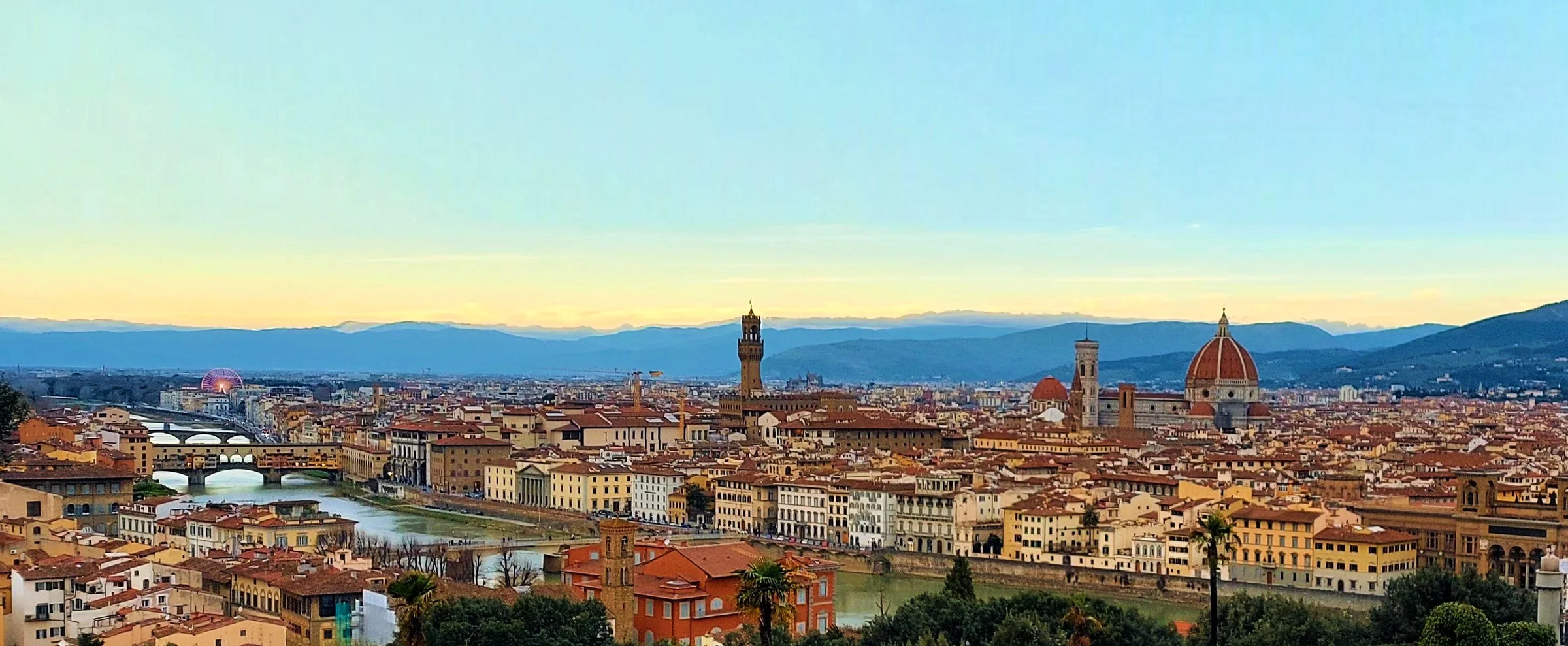
Florence is easy to recognize before you arrive: a terracotta dome, sculpture in a sunlit square, shops balanced over the Arno. The pleasure of a first day comes from joining those images together. Watch how the city changes between them, from the patterned marble around the cathedral to the close streets beyond the river.
This walk begins at the Duomo, continues through Piazza della Signoria and crosses Ponte Vecchio toward Santo Spirito in the Oltrarno. Choose one substantial visit near the beginning and leave space for lunch and an afternoon pause. The sequence gives the day a direction; your reservation, energy and interests decide its pace.
Begin by looking around the Duomo
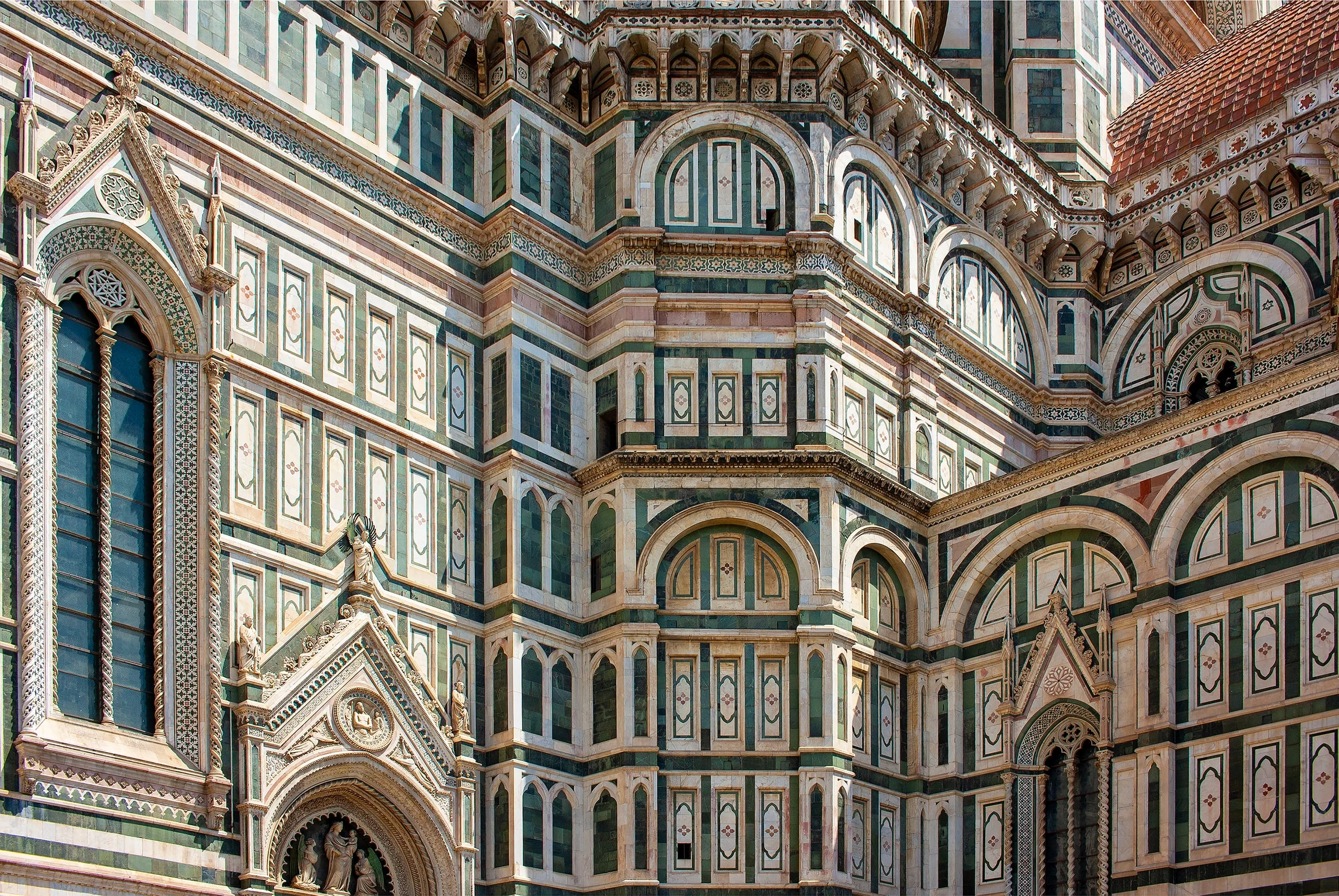
At Piazza del Duomo, resist choosing a queue immediately. First identify Santa Maria del Fiore, the detached bell tower and the Baptistery. Stand where you can take in their different shapes, then move closer to one detail in the marble. Give yourself a moment to see the buildings together before treating them as separate attractions.
Look upward from the patterned walls to Brunelleschi's dome. The cathedral began in the medieval city, while the dome became one of the great achievements of the early Renaissance. Its white ribs and terracotta surface give your eye a different path from the decoration below. Keep doorways and moving queues clear as you stop.
Planning tip Begin outdoors even if your booked visit comes later; the exterior helps make sense of what you will see inside.
Give one visit your full attention
Choose a museum visit or a dome climb for the main commitment of the morning. The Opera del Duomo Museum brings together original works created for the complex. It is a rewarding choice if you want to connect sculpture with the buildings outside, and a useful alternative when a long staircase does not fit your day.
For the dome, reserve the required slot through Opera's official ticket shop and read the named-ticket instructions. The route has 463 steps and no lift; assess it before buying. Cathedral tourist entry is a separate free visit, subject to worship arrangements. Check current conservation and maintenance notices too, as works can change access or what is visible.
Planning tip Choose the experience first, then compare the official pass conditions; an included monument is an option for your trip, not an obligation for today.
Let the streets lead you to Piazza della Signoria
After your visit, take a break before heading south along Via dei Calzaiuoli toward Piazza della Signoria. The street is part of the experience: look at the buildings above shop level and notice how the view narrows, then opens again at the square. Walk with enough room to change your mind about a café or a detail that catches your eye.
This is a useful point to reassess the day. If the morning ran long, keep the remaining route outdoors. If you still have attention for another interior, save the idea for a different day instead of making every available hour a booking. A first visit needs room for impressions to settle.
Read the square as a civic stage
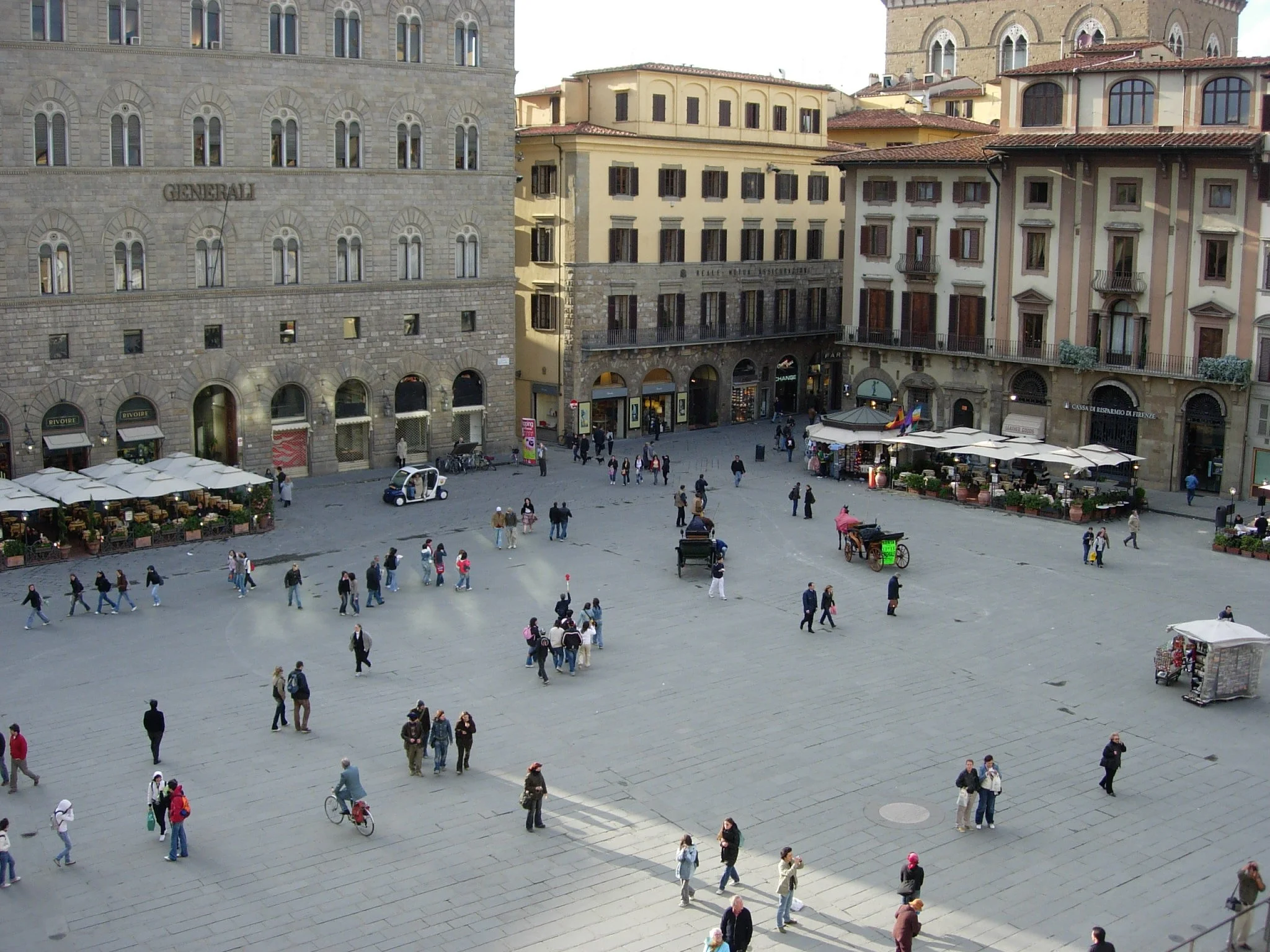
Piazza della Signoria changes the subject from cathedral to government. Palazzo Vecchio's heavy stone front and tower give the square a clear focus. Look at how the sculpture occupies the space around it, then choose a single work to study before walking the perimeter. The relationship between object and setting is as interesting as identifying the artist.
The David outside Palazzo Vecchio is a copy; Michelangelo's original is in the Galleria dell'Accademia. Here, use the figure to think about how sculpture addresses a public square. Look toward the Loggia dei Lanzi for another arrangement of figures beneath architecture. Follow any access barriers and avoid leaning on the works or their bases.
Put a real break in the middle of the day
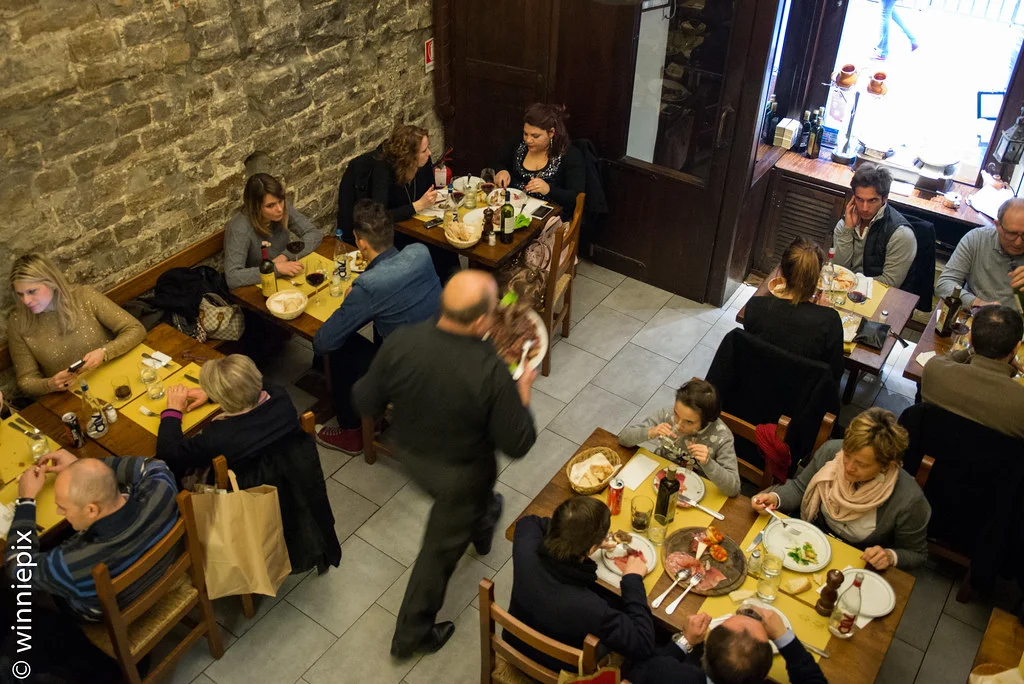
Have lunch before the afternoon becomes another list to finish. Choose a place you can sit comfortably, read the current menu and allow time to eat. Decide what matters today: a longer meal, a quick lunch followed by a rest, or a later reservation that becomes the day's final stop.
Keep a little space between a restaurant booking and a ticketed visit. If you have dietary requirements, ask directly about ingredients and preparation. TourPedia's dining guides can help locate a venue and its official contacts; they do not replace a conversation about the meal you need. Check where you will rejoin the walk afterward.
Meet the Arno at Ponte Vecchio
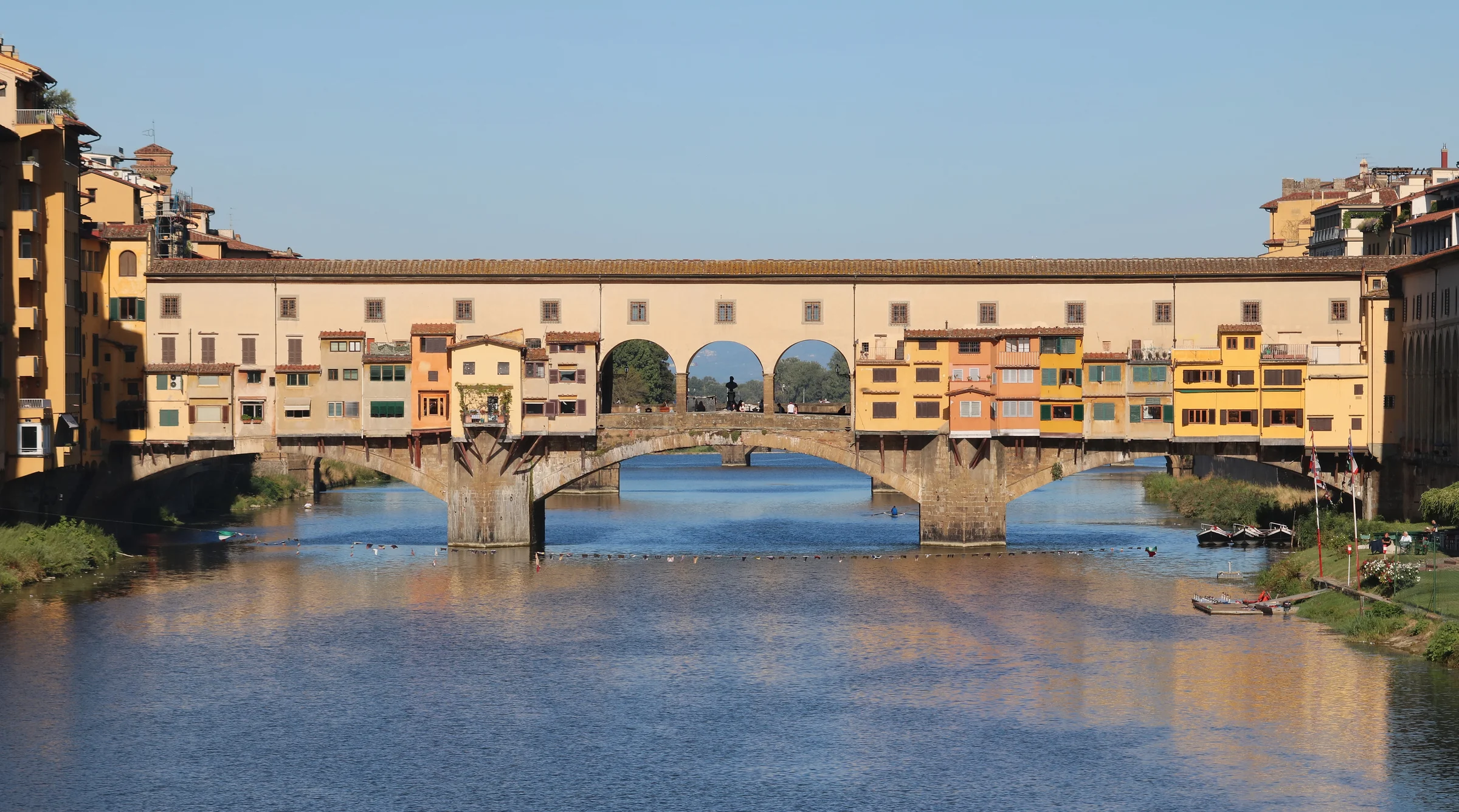
Continue toward the river and Ponte Vecchio. The bridge you see today dates from 1345, and its rows of shops make the crossing feel almost like another street. Notice how the buildings frame glimpses of water. At an opening, pause only where there is room for people to pass, then cross to the south bank.
For a fuller view, step away from the bridge along the riverbank and look back. The shops that surrounded you now become part of a structure spanning the Arno. Compare those two views before moving on. You do not need to wait for a particular light or an empty bridge to understand why the crossing belongs to the city.
Planning tip Keep the bridge crossing and a riverbank view as separate moments; one shows the street, the other shows how it crosses the water.
Finish with smaller streets around Santo Spirito
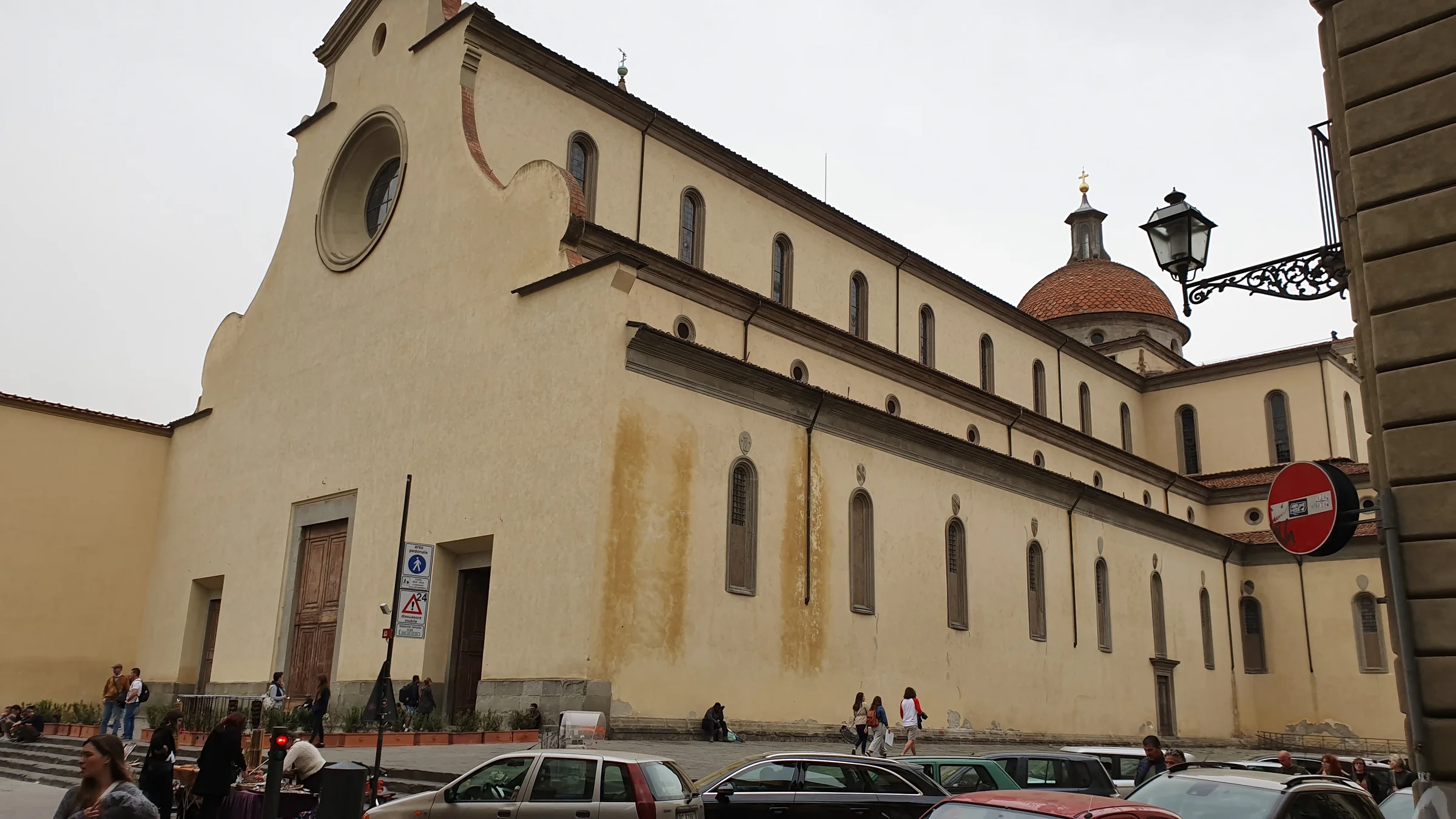
From the south end of Ponte Vecchio, continue along Via de' Guicciardini, then make your way west toward Piazza Santo Spirito. You are in the Oltrarno, the part of the city beyond the Arno. Let the scale of the walk change here: a shop window, a doorway and a place to sit can become enough for the next part of the afternoon.
Craft workshops are part of this area's identity. Where a working shop welcomes visitors, ask before entering or photographing and take an interest in what is being made. Around Santo Spirito, keep the visit considerate of people using the square and going about their day. If you enter the church, check its own current visitor arrangements and dress appropriately.
Leave room to finish while you still want to look
End with a seated pause or an easy return toward your accommodation. There is no required final viewpoint. Another museum, the gardens or an uphill panorama can become the focus of a later day rather than a weary addition to this one. The route already connects a cathedral complex, a civic square and both banks of the river.
Wear shoes suited to uneven paving, allow for crossings and busy streets, and shorten the route when needed. For mobility requirements, check each intended entrance and the paths between them in advance. A map's short distance does not guarantee a comfortable journey. Make the version of this day that leaves you curious about Florence when you return.
Planning tip Keep your main visit fixed and the rest flexible; weather, queues and walking needs can change the order and the amount you do.
Before you go
- Choose one main museum visit or climb and read its current official conditions.
- Check worship closures, maintenance notices, dress requirements and bag rules for your chosen route.
- Keep a meal and a seated pause in the plan.
- Confirm the route from your accommodation and any access arrangements you need.
- Ask before photographing inside a working shop and keep entrances and crossings clear.
- Leave the afternoon flexible enough to finish at your own pace.
Your questions, answered
Can I follow this walk without climbing the Duomo?
Yes. Begin with the exterior and choose the museum if it interests you, then continue through the squares and across the river. The dome climb is optional. Check the actual route and entrances for your own mobility needs.
Does the walk include a visit to the Uffizi or Accademia?
No. This route gives one main visit at the Duomo complex its own space. If the Uffizi or Accademia is your priority, build the day around that museum instead and reduce the outdoor route accordingly.
Is the cathedral the same visit as the dome climb?
No. Tourist entry to Santa Maria del Fiore is free, while the dome route requires an appropriate ticket and reservation. Check Opera's current calendar and conditions for the experience you intend to book.
About this story
This story completed TourPedia’s editorial and photograph checks before publication. Visiting arrangements can change; check current information before travelling.
Our editorial approach