Madrid: 12 Essential Sights, from Royal Rooms to Retiro
Discover Madrid through twelve landmark visits, from the Royal Palace and Prado to Retiro, historic squares and the Bernabéu, with a practical first-trip plan.
- Explore twelve distinct sights across royal Madrid, the Art Walk, historic squares, gardens and football history.
- Choose between the Prado, Reina Sofía and Thyssen by your interests instead of compressing all three into one rushed day.
- Account for the current Crystal Palace closure, fountain restoration notice and date-specific Bernabéu restrictions.
- Continue with five detailed TourPedia place guides and current links to the official visitor institutions.
Madrid is Spain’s capital and its largest municipality by population, but the rewarding first visit happens at a smaller scale: a painting, an entrance arch, the shade of a park path or a street corner that makes you stop looking at the map. Royal architecture and celebrated collections matter, yet so do the spaces between them. A good plan gives both a little room.
This guide introduces twelve of the city’s established sights, from the Royal Palace and major art museums to historic squares, Retiro and the Bernabéu. Each has a different reason to visit and a different set of practical questions. Choose your priorities, group them sensibly and use the current official information for bookings and access. The order below pairs central walks with museum, park and football outings.
Royal Palace: begin with the scale of a royal capital
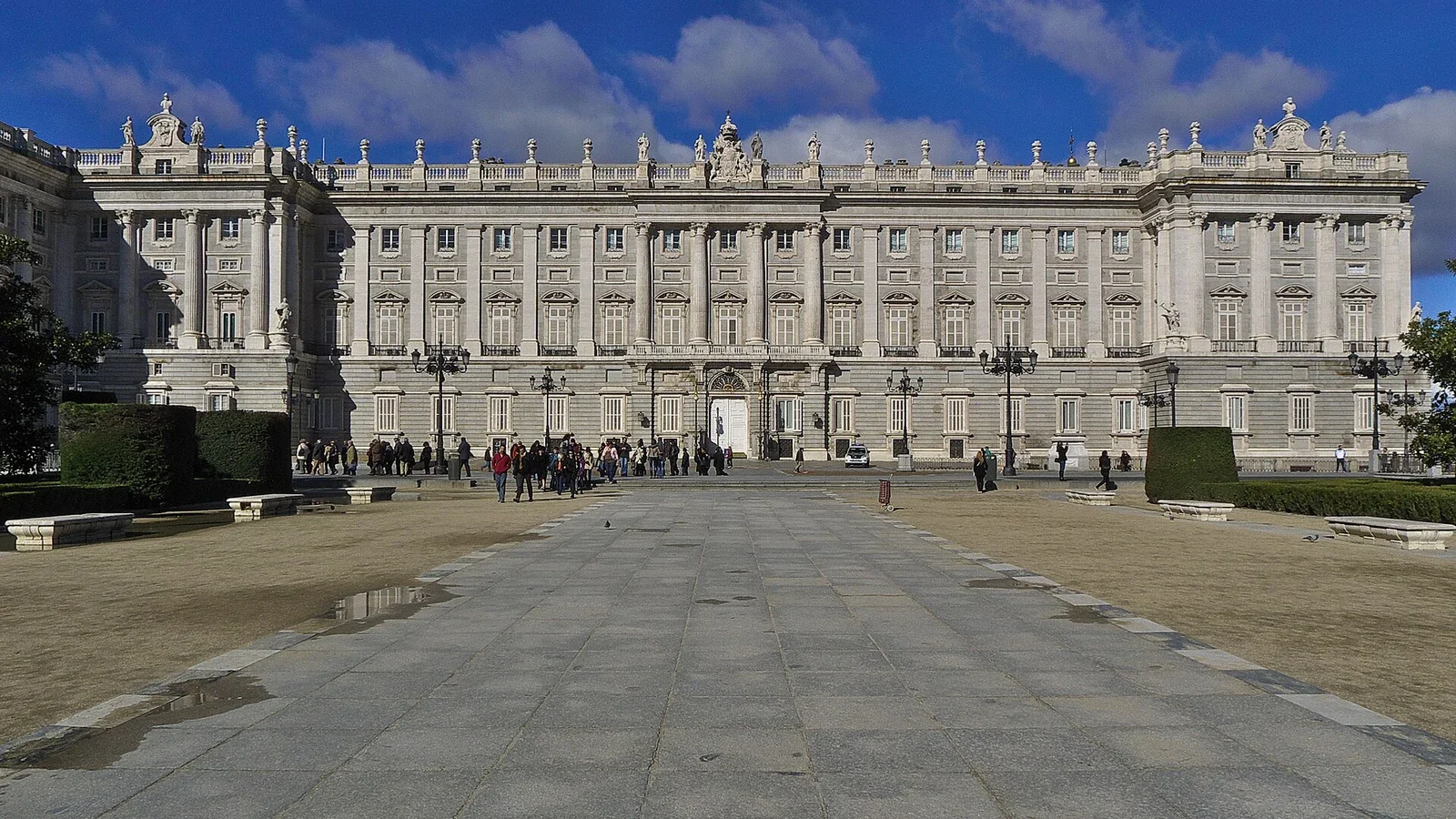
Approach the Royal Palace from the surrounding streets before entering its interiors. The breadth of the building, the open spaces around it and the relationship with Almudena Cathedral give a first impression of how royal power shaped this part of Madrid. This is an official royal residence used for state functions, rather than the royal family’s everyday home. A visit makes more sense when you see it as both a historic building and a place that still has ceremonial responsibilities.
The present palace followed the fire that destroyed the earlier Alcázar in 1734. Inside, look for the way architecture, painting, furniture and decorative materials work together to present authority. Choose a few rooms or details to study closely instead of trying to remember every name on a route. The exterior photograph in this guide records a particular view; it does not establish which rooms will be accessible on your visit.
At the 30 October 2026 information check, Patrimonio Nacional directed visitors towards the Almudena esplanade entrance at the corner of Calle Bailén. Use the entrance stated on your current ticket and official notice, rather than a generic map pin in the middle of the palace. State events can change access. The Royal Kitchen is a separate visit, and nearby institutions should not be assumed to share the palace’s ticket or opening arrangements.
Make this the principal indoor visit of a western-city outing. Afterwards, a walk through the surrounding squares provides a useful change of pace. Our separate Royal Palace guide brings the entrance, historical context and booking checks together; find it among the TourPedia guide links below.
Planning tip Check the exact date, entrance and included spaces with Patrimonio Nacional. Do not build a tight onward booking around an assumed palace exit time.
Prado Museum: give a few paintings your full attention
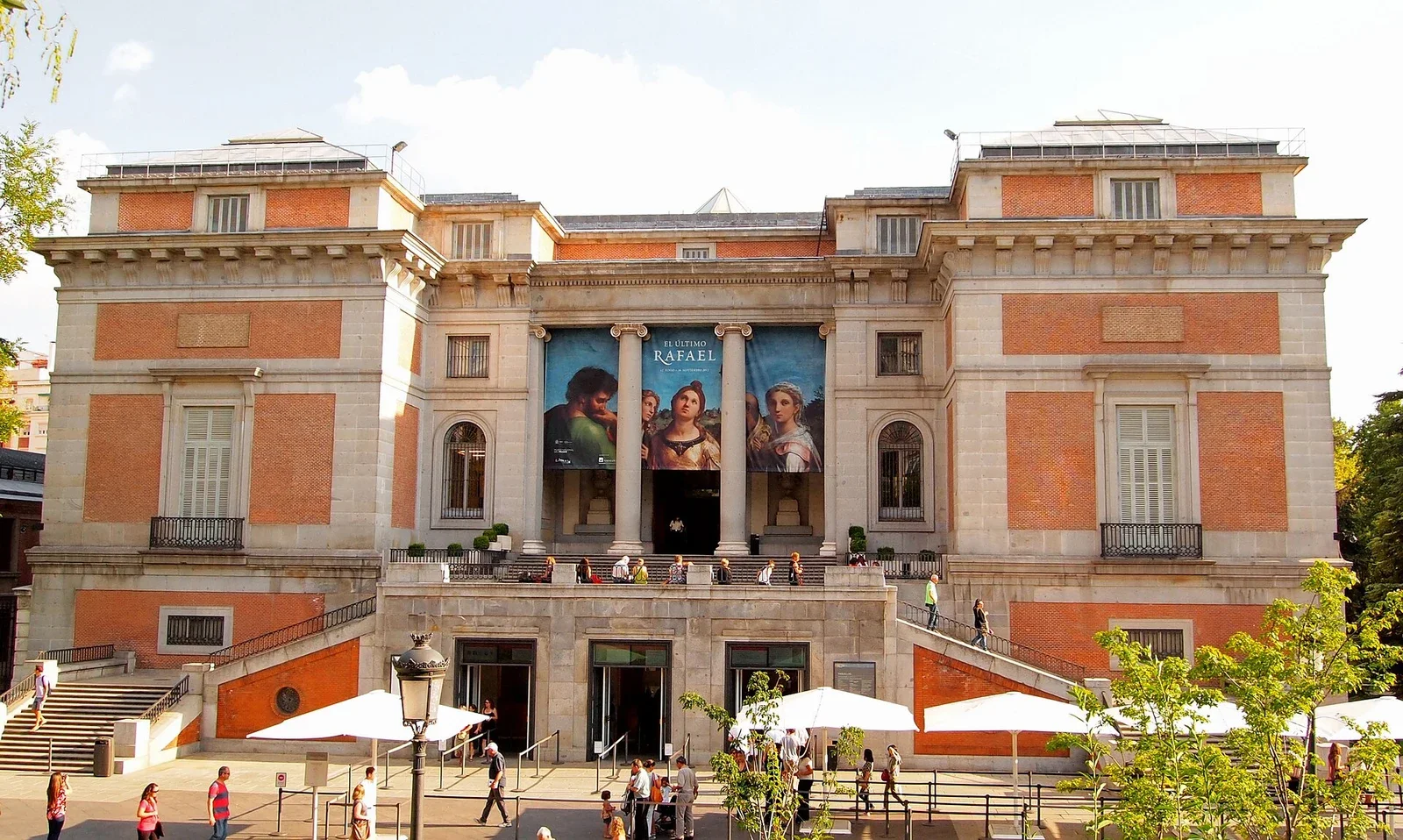
The Prado is one of the strongest reasons to build a Madrid trip around art rather than around a list of streets. Its collections bring together artists including Velázquez, Goya, El Greco, Titian, Rubens and Bosch. Those names are an invitation to choose an interest, not a demand to complete a famous-work circuit. Decide whether you want to follow a painter, explore a period or spend time with a small selection before entering.
The museum opened in 1819, in a building associated with Juan de Villanueva. Its history and the royal origins of much of the collection help explain why the experience differs from a broad survey assembled to represent every movement equally. In front of a painting, begin with what you can see: the arrangement of figures, the use of light, a gesture or the relationship between a viewer and the scene. Read the label after giving the image a moment of your own attention.
Do not make the Prado, Reina Sofía and Thyssen a compulsory three-museum day. They offer different stories and ask for different kinds of concentration. Consult the Prado’s current collection and visitor information for your priorities; a work’s fame does not guarantee that it will be on view in a particular room. Booking conditions, entrance arrangements and concessions should come from the museum’s own website.
After an indoor visit, the Paseo del Prado or nearby gardens can provide a natural interval. Keep a meal and some unbooked time in the plan. The linked TourPedia Prado guide explains how to prepare a focused visit without treating the collection as a race.
Planning tip Choose your main interest before choosing a ticket time. Check current display information if seeing a specific work is essential to you.
El Retiro: understand the park beyond its postcard
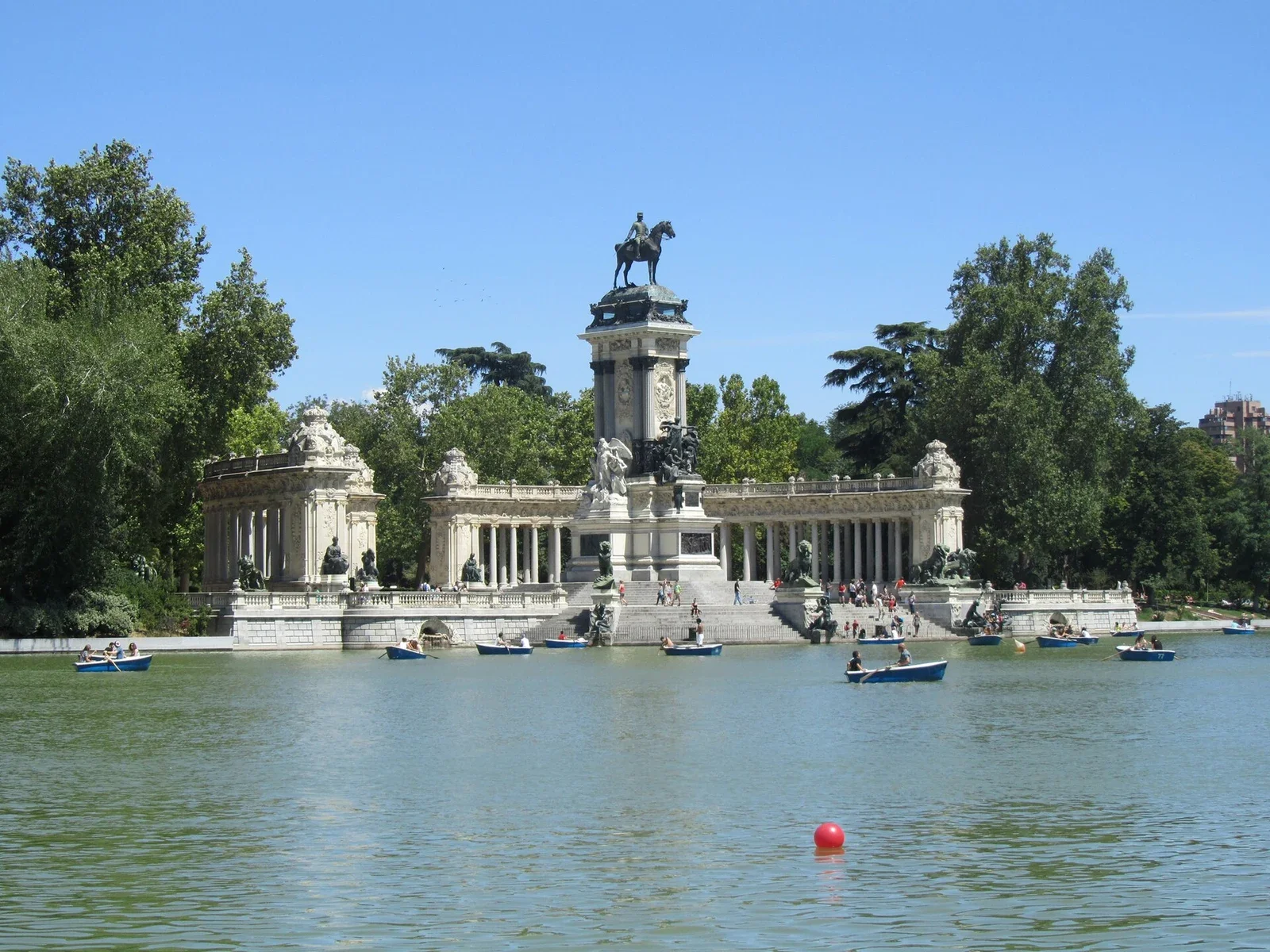
Retiro gives the art district a different rhythm. Paths, planting, water and open spaces invite you to move without the sequence imposed by a museum room. The large pond and the monument to Alfonso XII make a recognizable starting point, but they are only part of the park. Choose an entrance that suits the place you are coming from, then allow the outing to become a walk rather than an attempt to visit every marked feature.
The Paseo del Prado and Buen Retiro landscape entered the UNESCO World Heritage List in 2021. The designation recognizes a particular cultural landscape that connects designed green space, public life and institutions of knowledge and art. It is more useful to notice those connections than to treat a heritage label as a promise that every corner will look unchanged. Look at the transition between the city streets, formal paths and quieter planted areas.
There is a significant current limitation: at the 30 October 2026 check, the Reina Sofía’s official information listed the Palacio de Cristal as closed for restoration. Do not plan an interior visit there from an older image of the glass building, or assume that an exhibition in Retiro’s galleries will be available simply because the park is open. Weather alerts can also change park access; check municipal notices close to your visit.
Retiro can be the main outing of a gentle morning or a deliberately short outdoor interval after a museum. Choose according to the energy and interests of your group. Our detailed Retiro guide separates the park’s landmarks, the closed gallery and practical entrance planning.
Planning tip Treat park access and gallery access as separate checks. A photograph of a boat or an open building is not a current operating notice.
Plaza Mayor: read a historic square from its edges
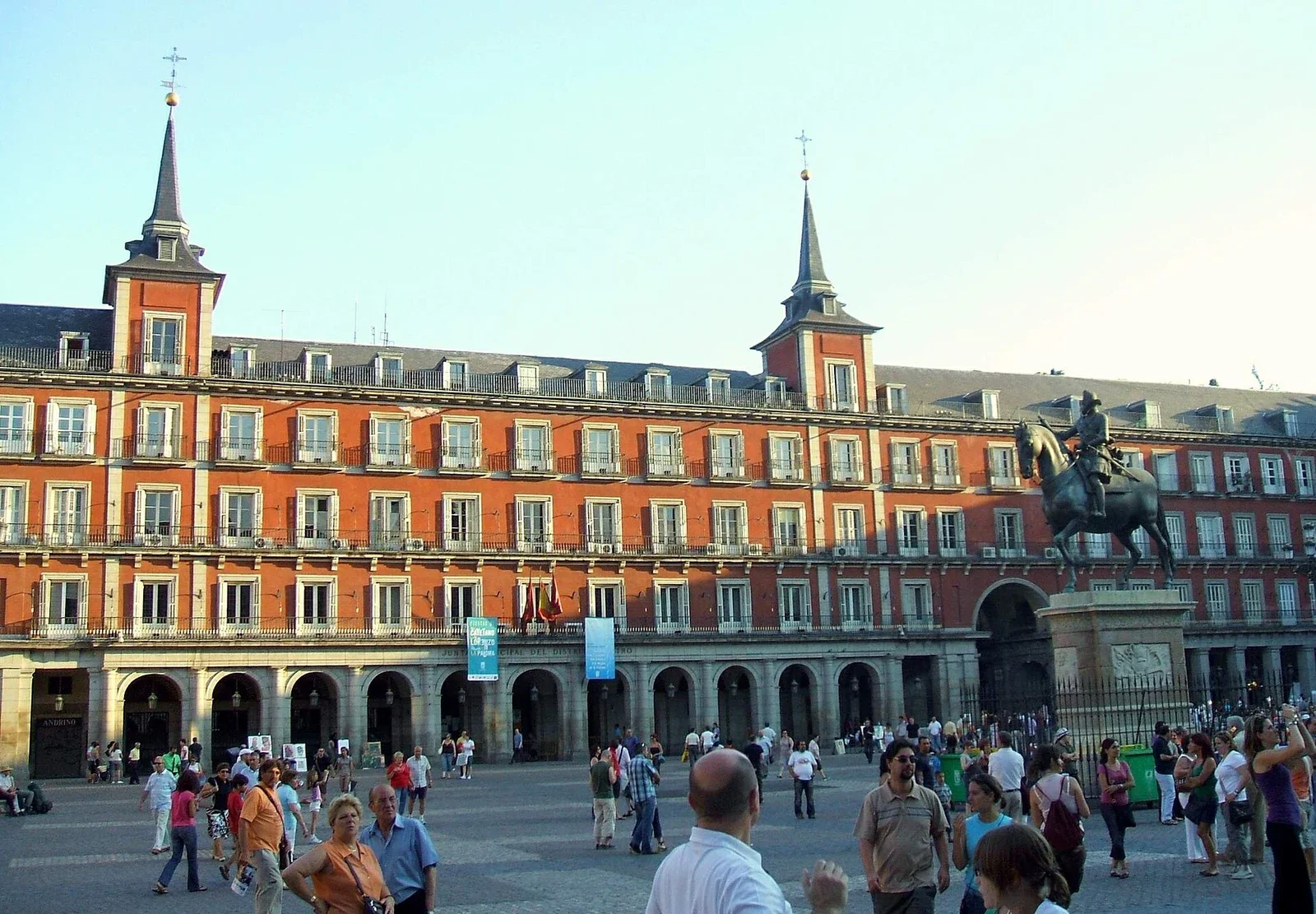
Plaza Mayor is best approached as a room made by the city. Pass beneath an entrance arch and notice how the surrounding streets give way to a broad, enclosed space. The repetitive arcades, upper windows and decorated Casa de la Panadería give its edges a strong identity, while the equestrian statue of Philip III draws attention towards the middle. Take a slow circuit before settling on a single photograph.
The square developed into its monumental form in the early seventeenth century and was reshaped after fires. Its history includes markets, royal occasions and public spectacles. Those changes matter because the present setting is not a perfectly preserved scene from one moment. Look at the uniformity of the frontage alongside the different ways people use the ground level: crossing the square, meeting, working or pausing under an arcade.
If you want to sit for a drink or a meal, look at the actual menu and prices before choosing a table. A famous address is not a guarantee of a particular dining experience. The same distinction applies to visiting: looking around the public square and entering a nearby business are separate decisions, and occasional events can affect the space.
Plaza Mayor belongs naturally with a historic-centre walk through Puerta del Sol and the streets towards the Royal Palace. Keep the walk flexible, with time to look into a side street or stop somewhere that interests you. The separate TourPedia guide offers more historical context and a simple way to approach the square without turning it into another timed attraction.
Puerta del Sol: find the city’s meeting point
Puerta del Sol is a place to orient yourself before it is a place to tick off. Streets converge here, people arrange to meet, and familiar Madrid symbols appear within a busy public setting. Look for the former Post Office building and its clock, the Kilometer Zero marker and the Bear and the Strawberry Tree sculpture. They explain why the square appears so often in the city’s visual identity, but they do not require a long formal visit.
The clock is associated with the New Year tradition of eating twelve grapes with the midnight chimes. Kilometer Zero marks a reference point for Spain’s radial road network; it should not be confused with a claim that this paving stone is the geographical centre of the country. Small distinctions like this make the visit more interesting than repeating a familiar slogan about the heart of Spain.
Use the square to begin a manageable walk rather than to connect every sight on your map. Plaza Mayor lies within the historic-centre area, while another outing can turn towards Gran Vía. Leave enough attention for crossings and for the movement of other people when stopping to read a marker or take a photograph. A clear meeting point and a planned next stop are more useful than trying to cover all the radiating streets at once.
Check current transport notices if you intend to use Sol station. A central station name is an orientation aid, not proof that the particular line, exit or step-free route you need will be operating as expected on your travel date.
Reina Sofía: allow time for modern art and difficult history
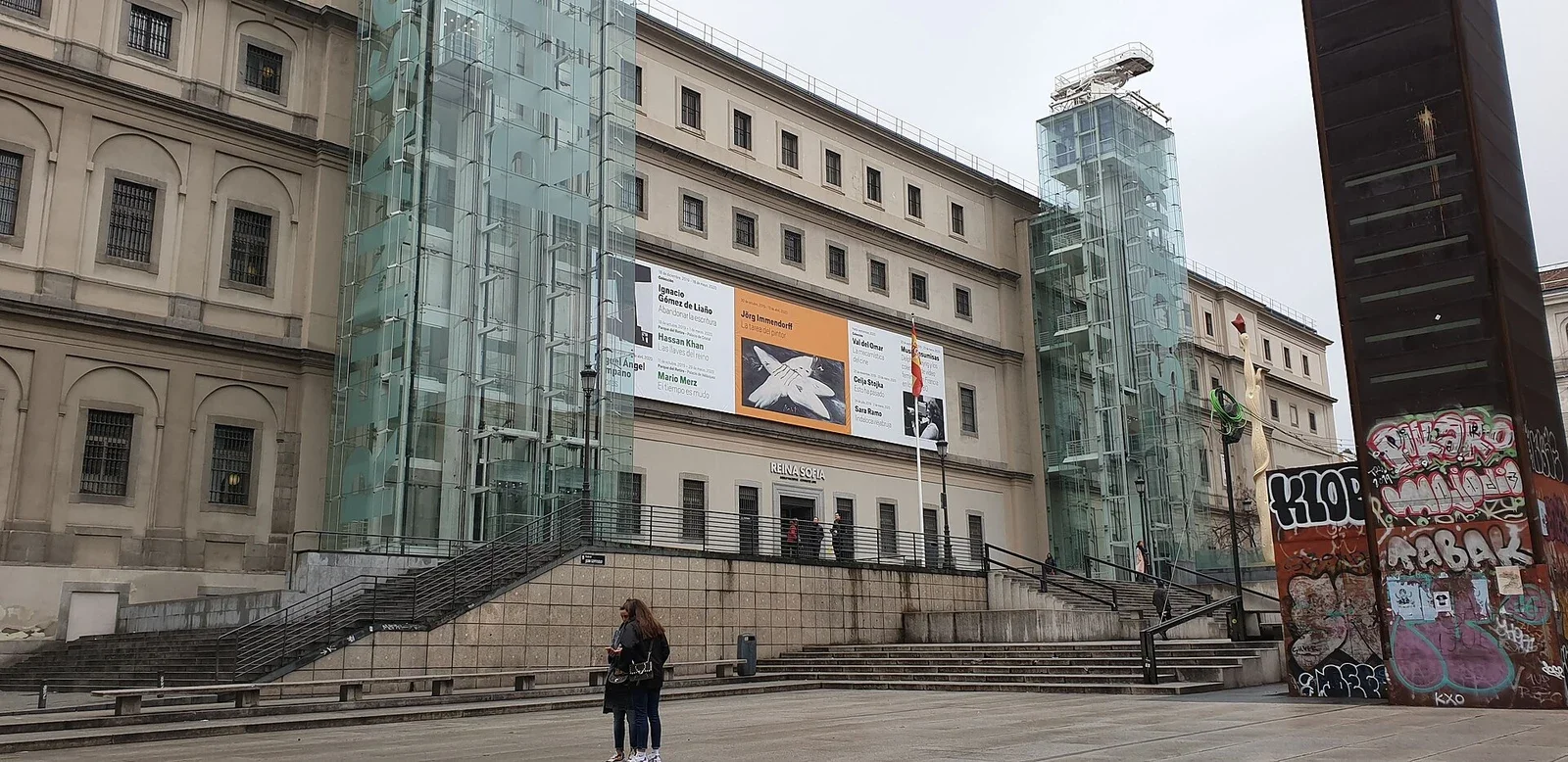
Reina Sofía offers a different encounter with art from the Prado. Its modern and contemporary collections invite questions about the twentieth century, political upheaval, artistic experiment and the ways images circulate. Picasso’s Guernica is a major focus, but it deserves the context around it rather than an isolated stop for recognition. Arrive with enough time to read, look and pause.
The museum occupies the former hospital building associated with Francisco Sabatini alongside the later Jean Nouvel expansion. The relationship between those spaces is part of the visit: courtyards, circulation and changing architectural scales influence how you move between works. Do not assume that one short route through a celebrated room represents the whole institution.
For Guernica, read the museum’s own account of the work and its historical setting. A painting connected with violence and suffering calls for attention, not a promise of a cheerful sightseeing moment. Check current collection displays if particular artists or works matter to your visit. Temporary exhibitions may require a separate decision about time and admission, even when they share a building.
The museum’s main Madrid site and its Retiro venues have different access conditions. The Palacio de Cristal closure noted in this article should not be interpreted as a closure of the main museum, and a main-site ticket should not be treated as evidence that every satellite space is open. Use the museum’s current visitor page and our linked Reina Sofía guide to plan the actual building and entrance you intend to visit.
Planning tip Read the museum’s current weekly closing day, entrance arrangements and exhibition conditions before fixing the rest of your day.
Thyssen-Bornemisza: make connections across centuries
The Thyssen-Bornemisza is a good choice when you enjoy moving between periods and noticing how painting changes. Its collection ranges across centuries of European art and includes a substantial route into later movements. Rather than looking for a second version of the Prado, use it to ask a different question: how do artists change their treatment of landscape, portraiture, light or modern life?
The museum occupies the Villahermosa Palace on the Paseo del Prado. That location puts it within the same broader art district as the Prado and Reina Sofía, but geographical proximity does not remove the need for time and concentration. Choose a floor, theme or part of the collection that interests you, then see how individual works speak to one another.
A visitor who loves landscape might follow the relationship between observed detail and atmosphere; someone interested in cities might compare the ways buildings and streets are represented. These are suggested ways of looking, not promises about a fixed room arrangement. Consult the current museum map and collection information before selecting particular works.
Check which collection and temporary exhibition your chosen ticket covers. If you plan more than one art museum during a stay, leave a gap between them for a walk, food or a different kind of visit. Remembering a handful of paintings clearly can be more rewarding than carrying a blurred memory of three consecutive institutions.
Gran Vía: look up at a twentieth-century city
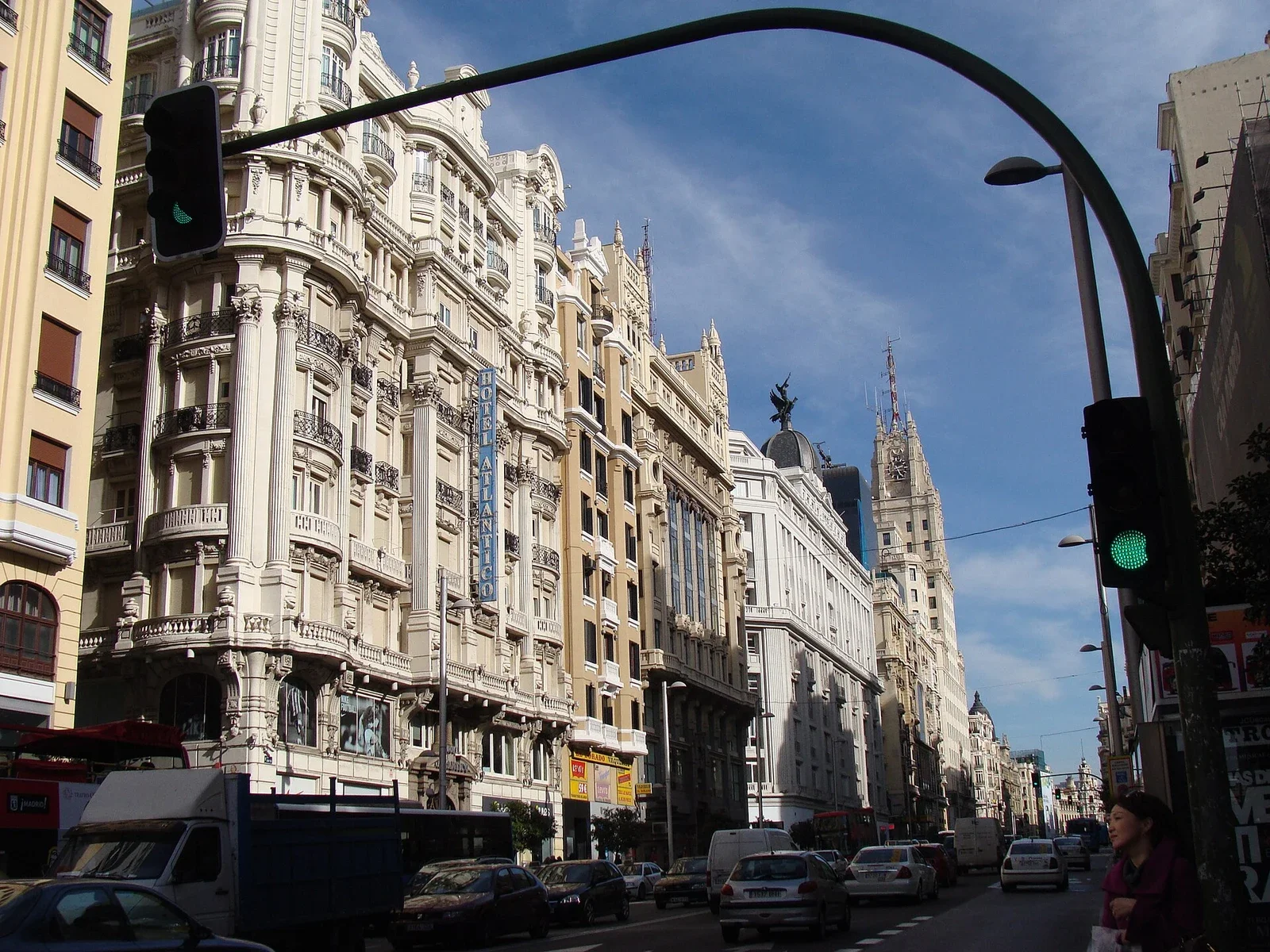
Gran Vía changes the architectural mood of a first Madrid visit. The avenue’s development began in the early twentieth century, and its theatres, commercial buildings and prominent corners tell a different story from the royal precinct and the older central squares. Walk a selected stretch with time to look above the shopfronts. Facades, rooflines and the way buildings turn a corner become the main attraction.
The Metrópolis building at the junction of Calle de Alcalá and Gran Vía provides a familiar orientation point at the eastern approach. Farther along, the avenue offers changing scales, signs and views down adjoining streets. Treat these as parts of an active city rather than as a stage set: shops, crossings, deliveries, commuters and visitors all share the same space.
A daytime architecture walk and an evening performance are different plans. If a musical, theatre show or film interests you, choose the actual venue and programme and confirm the starting time and ticket conditions. Passing a theatre frontage does not establish that a particular production is running, and an older photograph of a sign is not a current event listing.
Gran Vía can connect with Puerta del Sol by the surrounding streets, or with a separate westward outing towards Plaza de España. Decide where the walk ends before adding more stops. Leave space for an unhurried café interval and keep a return route in mind if the evening continues beyond the walk itself.
Temple of Debod: place an Egyptian monument in its Madrid setting
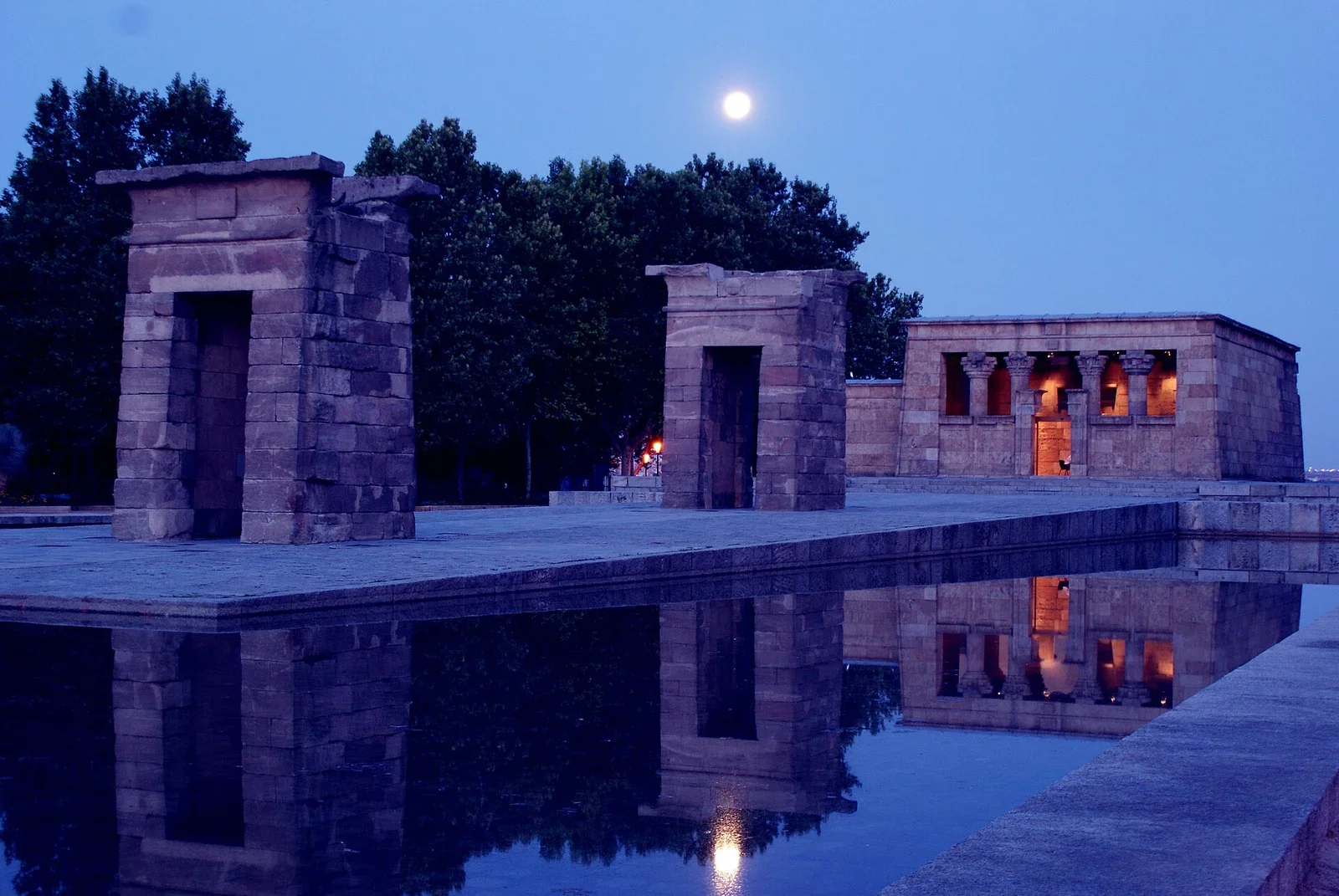
The Temple of Debod brings a much older architectural history into a different landscape. The ancient Egyptian temple was presented to Spain in connection with international efforts to safeguard monuments threatened by the Aswan High Dam, and it opened in Madrid in 1972. Its presence asks you to think about preservation, relocation and the relationship between a monument and the place where visitors now encounter it.
Begin with the structure’s scale and the sequence suggested by its gateways rather than expecting a vast temple complex. The surrounding park and the western views form part of the modern experience, but they should not replace the building’s Egyptian context. Read the official interpretation to distinguish the original monument from its twentieth-century installation in Madrid.
An exterior visit and admission to the interior are separate possibilities. Consult the city museum’s current arrangements for opening, reservations and capacity; do not assume that arriving at a scenic time guarantees entry. Likewise, an archival picture showing reflections or a particular water level does not establish how the surrounding pools will look today.
This visit can fit a western-city outing when the actual timings work, but it deserves its own decision about how much interpretation you want. If you go for an evening view, keep weather, daylight and the journey afterwards in mind. A photograph may suggest an atmosphere; it cannot promise the same light or a quiet space.
Cibeles: connect a civic landmark with the Art Walk
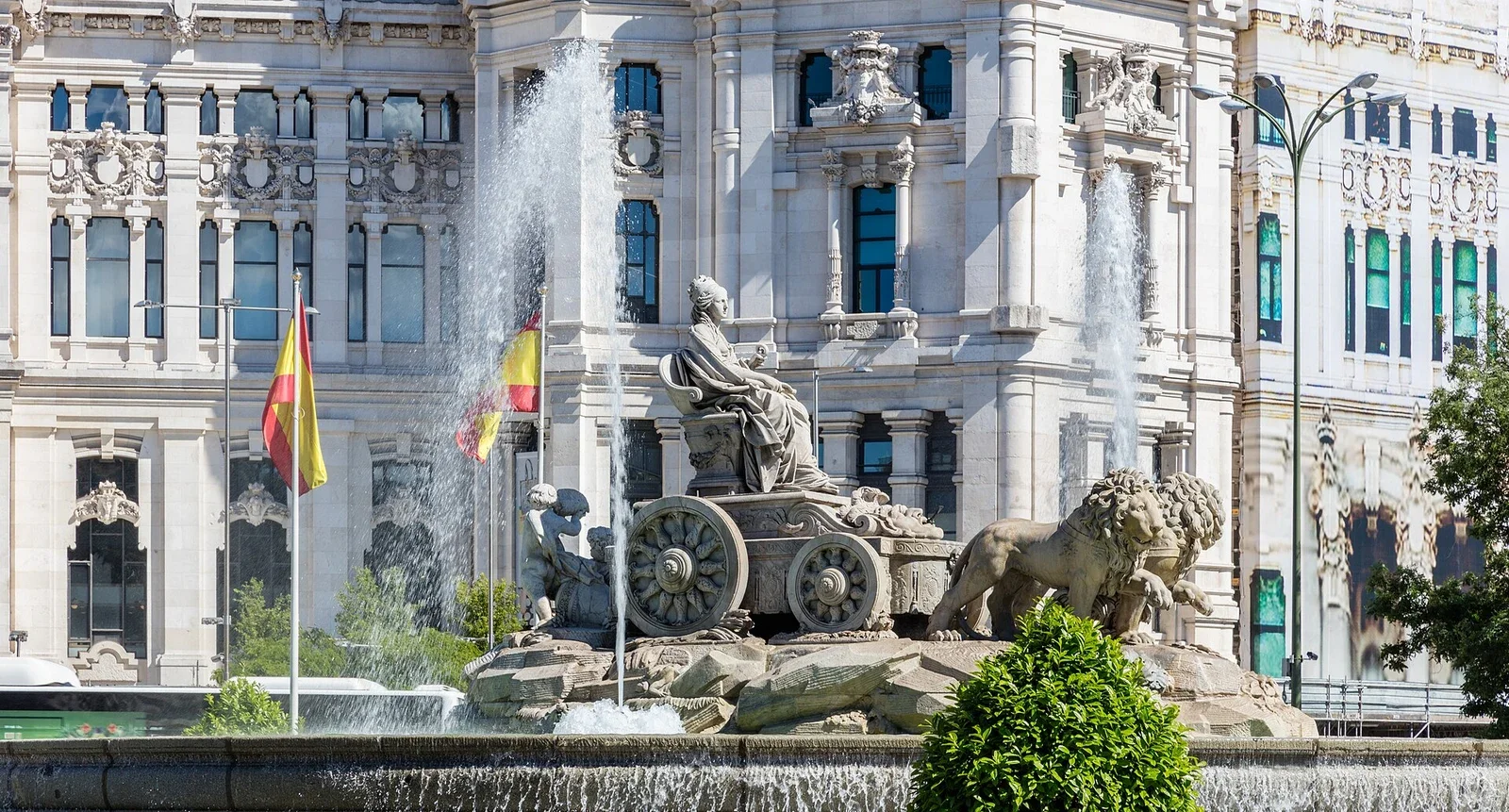
The Cibeles area joins several of Madrid’s most familiar images: the fountain, a major road junction and the elaborate white Palacio de Cibeles. Look at how a monument, traffic and civic architecture share the same space. It is a useful point for understanding the relationship between Calle de Alcalá and the Paseo del Prado, rather than simply another background for a photograph.
The palace began as the city’s communications headquarters and later became Madrid’s city hall. CentroCentro’s cultural spaces and the observation deck offer another perspective on the building. At the 30 October 2026 check, municipal pages gave conflicting information about the observation deck’s availability. Confirm access directly through CentroCentro before adding it to your plan; the exterior and a booked interior visit have separate arrangements.
At the 30 October 2026 research check, the Spanish-language municipal tourism selection still warned of scaffolding for restoration around the Cibeles Fountain. This guide therefore does not promise an unobstructed view or a photographic scene matching the archival image. Check the city’s current notice if seeing the fountain clearly is a major reason for going. The wider square and surrounding architecture can still offer context, subject to actual street and access arrangements.
Use pedestrian crossings and established pavements to look around; the fountain is not a reason to step into a traffic island or carriageway. From this part of the city, choose either a focused Art Walk outing or a street walk towards another neighbourhood. A single place can help you read the map without becoming a hurried transfer between several bookings.
Santiago Bernabéu: choose a football visit for the route actually offered
The Bernabéu provides a different kind of Madrid landmark: a football institution, a stadium and a museum experience centred on Real Madrid. For a supporter, the club’s history may be a central reason for travelling. For another visitor, the interest may lie in the building and the way a major sporting venue operates within the city. Decide which experience matters to you before choosing a ticket.
Do not treat a stadium tour as a promise to see every space shown in promotional photographs. At the 30 October 2026 official-information check, the tour operator explained that schedules and routes change around matches and events. Dressing rooms and benches were excluded on match days and the day before, and the pitch could be stored underground outside match conditions. A full green playing surface is therefore not a guaranteed part of the view.
The operator also describes a route involving stairs and limitations for visitors with reduced mobility. Check current assistance arrangements with the official tour team before purchasing, especially when access requirements are important to your group. A modern stadium exterior does not by itself establish a step-free sightseeing route through all included spaces.
The stadium is a separate northern-city outing from the compact historic-centre walk. At the 30 October 2026 check, the city’s Metro guide warned of a Line 10 interruption between Nuevos Ministerios and Cuzco for Santiago Bernabéu station works. Recheck the actual route, replacement service and visitor entrance for your date. Leave time for security and the return. Match attendance requires its own event ticket; a stadium tour has different admission conditions.
Planning tip Read the date-specific official tour route. Check match/event restrictions, the pitch presentation and mobility arrangements before committing.
Royal Botanical Garden: slow down beside the museum district
The Real Jardín Botánico offers a quieter kind of looking next to the Prado: living collections, plant labels, ordered spaces and the changing detail of a garden. Its current Madrid site opened in 1781, and it belongs to the scientific and landscaped setting of the Paseo del Prado. The interest is not only in a striking flower. A labelled specimen, the structure of a tree or the arrangement of planting can change the pace of a day spent with paintings.
Give the garden a purpose of its own rather than treating it as a convenient shortcut. Choose whether you want a short, attentive walk or more time with the collections and interpretation. Seasonal appearance varies, and an older image of blossom, foliage or a greenhouse does not establish what will be visible on your date. Consult the institution’s current information for accessible areas, exhibitions and any temporarily restricted spaces.
A garden visit can sit beside a Prado day without becoming an obligation to complete both. Leave enough time for the museum that matters to you, then decide whether an outdoor interval suits the weather and your group. Botanical collections are another way to understand the district’s connection between public space, knowledge and designed landscapes.
Use the garden’s official visitor page for admission, concessions and seasonal opening arrangements. Keep its entrance separate from nearby museum entrances when planning a route. By the end of a visit, remembering a few plants closely can feel as worthwhile as recognizing another famous facade.
Turn twelve possibilities into a trip you can enjoy
This selection brings together landmarks highlighted by Madrid’s municipal tourism service and specialist institutions. It follows geography and visitor interests: open squares, an avenue, a park and ticketed buildings do not share a comparable admissions count. Choose the places that fit the kind of trip you want, allowing each principal visit enough time.
One useful grouping keeps the Royal Palace, Plaza Mayor and Puerta del Sol within a historic-centre outing, with Debod or Gran Vía considered only when the actual time and energy allow it. Another makes one art museum the main visit, with the Prado, Thyssen or Reina Sofía chosen deliberately rather than stacked automatically. Retiro and the Botanical Garden can be distinct outdoor visits or shorter intervals, depending on the day. Put the Bernabéu on its own transport plan.
These groups are an editorial planning framework, not a fixed three-day timetable or a promise about walking times. Check distances and the route you will actually use. Madrid’s official Metro and transport information should guide service, payment and accessibility decisions; do not assume that a product for one mode covers every journey. For airports, allow for the specific terminal, service and any applicable supplement rather than copying a fare from an old guide.
Book the visits where a particular time or limited route matters, then leave gaps around them for food, rest and the city’s ordinary streets. Read actual menus and prices before sitting down, and confirm dietary needs directly. Choose accommodation by considering your arrival and the areas you want to explore, then confirm current rates and booking conditions with the property.
Continue with TourPedia’s detailed guides to the Royal Palace, Prado, Retiro, Reina Sofía and Plaza Mayor through the links below. Each develops a particular visit, from its historical context to the entrance and practical checks. The official institutional links provide the next step for current operational information and reservations.
Before you go
- Choose one principal indoor visit for each day before filling the spaces around it.
- Check each museum’s current weekly closing day, exhibitions and entry conditions.
- Read the Royal Palace’s date-specific entrance and official-event notices.
- Do not plan an interior visit to the closed Palacio de Cristal without a confirmed reopening notice.
- Check current Cibeles restoration and municipal park/weather notices.
- Check the Bernabéu route, match calendar, pitch presentation and mobility limitations.
- Verify Metro routes, accessibility and payment products for the journeys you intend to make.
- Treat archival photographs as context, not evidence of today’s operating conditions.
- Leave time for meals, water, a pause and a clear route back to your accommodation.
Your questions, answered
How were these twelve Madrid sights selected?
The selection brings together established highlights identified by Madrid’s official tourism service and specialist visitor institutions. It covers royal architecture, major art collections, historic squares, parks and football history. The sequence helps organize a first visit; open public spaces and ticketed attractions do not share a comparable admissions count.
Should I visit the Prado, Reina Sofía and Thyssen on the same day?
You can choose your own pace, but a first visit often benefits from making one museum the main event and leaving time afterwards to walk or rest. The institutions have different collections, exhibition conditions and weekly closing arrangements. Choose by interest and confirm current visitor information.
Can I currently go inside the Palacio de Cristal in Retiro?
At the 30 October 2026 check, the Reina Sofía’s official information listed the building as closed for restoration. Do not assume an interior visit is available from an older photograph or the park’s own opening arrangements. Check for a confirmed update before planning around it.
Does a Bernabéu tour always include the pitch, dressing rooms and benches?
No. The official route and opening arrangements vary around matches and events. The information checked on 30 October 2026 excluded dressing rooms and benches on match days and the previous day, and explained that the pitch may be stored underground outside match conditions. Read the exact product and date restrictions before booking.
Can I see all twelve places in one day?
Do not treat that as the goal. Museums, palace interiors and stadium visits need their own time, while parks and public spaces reward a slower pace. Choose a few connected priorities, using current bookings and actual transport arrangements rather than a fixed sightseeing race.
Do the photographs show how the landmarks look today?
They are real documentary photographs with recorded credits and available capture context. They do not establish today’s restoration state, room access, queue, garden appearance, weather or event arrangements. Consult the current institutional notices for your date.
About this story
This story completed TourPedia’s editorial and photograph checks before publication. Visiting arrangements can change; check current information before travelling.
Our editorial approach